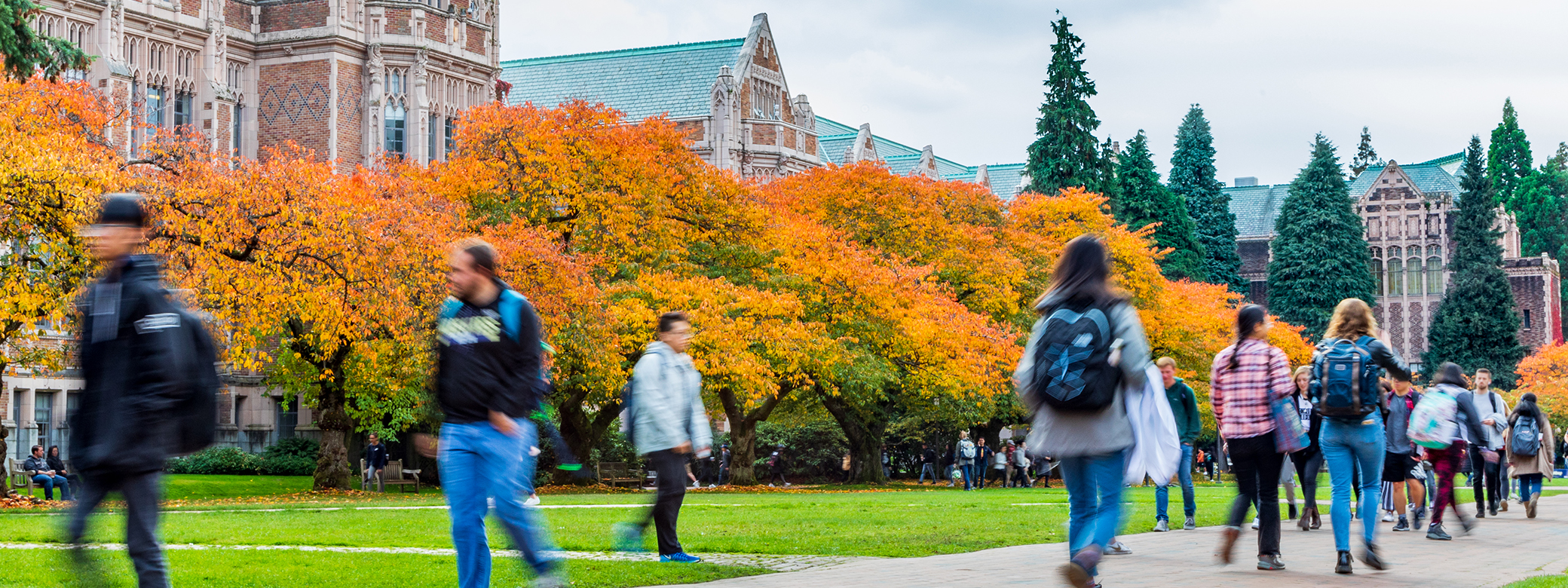
Students walking across UW quad with trees turning orange in fall.

Discretionary Funding Boosts Departmental Communities

Back to All Perspectives Stories
09/15/2026 September 2026 Perspectives
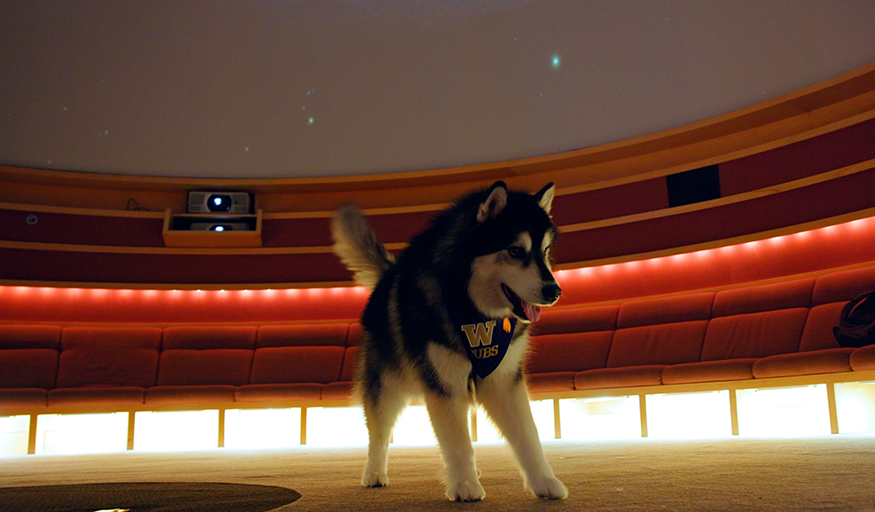
Dubs playing in the UW Planetarium.
On Husky Giving Day, Dubs visits the University of Washington Planetarium. Photo by Juan Rodriguez.

On Husky Giving Day, alumni, parents, students, faculty, staff, and friends around the world came together to support the University of Washington and make a lasting collective impact. This year, Arts & Sciences units raised discretionary funds—money that can be deployed to meet a department’s areas of greatest need—to support research, innovative coursework, student opportunities, and more

The adage “many hands make light work” is an apt descriptor of the power of collective giving. Students, faculty, and community members who give even $10 can make a shared impact on a department when these gifts are pooled together, creating a stable base of support for that department. From hosting student movies nights to supporting public events to studying the skies, we talked to two faculty members about how these funds will impact their communities.

How was Husky Giving Day for you this year? How did your department get involved?

Amanda Swarr, Chair & Professor, Gender, Women & Sexuality Studies: “This year we had a matching gift from an anonymous donor, and we decided to embrace the possibilities of Husky Giving Day, both for fundraising and for the opportunity to connect with our community. We were able to raise 23 gifts and over $8,500, which for us was amazing. We’re a small but mighty department. Husky Giving Day gave everyone a boost, despite the attacks on our field and the communities that we serve. We felt buoyed by the sense that our department continues to be a model for what feminist research and teaching can accomplish.”

Jessica Werk, Chair & Professor, Department of Astronomy: “This year, the department had several challenges running on Husky Giving Day. We also ran free planetarium shows for our community. One of our challenges asked our followers on social media to share a Husky Giving Day post for the opportunity to show Dubs space. This post had tons of engagement and we were able to bring Dubs to the planetarium and shoot a fun video that really engaged the community.”

Right now, unrestricted funds are really important for building community and a sense of belonging for our students.

Jessica Werk Professor and Chair, Department of Astronomy
portrait of Jessica Werk
How will these funds be used to support priorities within your department?

Swarr: “At the core of our fundraising efforts are our student experiences and trying to make them even more robust. That could look like helping students travel for conferences, throwing events where they can think together, improve their work, and supplement their research and sense of intellectual community, or an undergraduate research symposium where we award amazing student projects. And of course, we are a major research university. We produce some of the most important, cutting-edge research in the field. For faculty to be able to be supported in that, especially in this fiscally lean time around research support, is invaluable.”

Werk: “The money raised on Husky Giving Day will go towards supporting our Summer Research Prize students. This year, the Summer Research Prize provides $4,000 to eight students to support their ability to do 10 weeks of dedicated research on a project with a UW advisor. We're also going to use the money to have a research symposium at the end of the summer. We're hoping to send the students on at least one field trip to Eastern Washington to visit the Manastash Ridge Observatory. It’s a joyous thing to be able to support undergraduates doing research.”

How does discretionary or unrestricted funding impact the department?

Swarr: “Discretionary funding feeds into the long history that our department has of leading feminist research and teaching; work that we've been doing for five decades. It also gives us the stability to build the kinds of experiences that our department is invested in.”

Werk: “Right now, unrestricted funds are really important for building community and a sense of belonging for our students. Having the flexibility to host events is invaluable. We can support students in terms of the fundamentals of their research, but there's so much more to research than that.”

Are there any unexpected ways that these funds might be used?
GWSS students in class.
GWSS students participate in a lecture.

Swarr: “We have a brand new, as of last spring, registered student organization called GWSS RSO. They have been super active. They do research into archives, host film nights, and run amazing projects on campus to build their own community. It’s been great for us to be able to support this work that's student-led and student-centered with funding that can really enhance their own vision.”

Werk: “Providing food for events. Food has been bringing people together since probably before homo sapiens were even a species. We can try to think, oh, it's not necessary, but it totally is to our research and education mission. Maybe you're at a department event eating a piece of pizza and making a joke about something unrelated to astronomy, but that builds those human connections, that sense of community.”


Anything else you’d like to share?

Swarr: “This support gives GWSS a sense of optimism and hope. It’s a reminder that people can make a difference in the work that our department is doing. It feels like a space of opportunity that we don't get otherwise when the world can feel a little disempowering. Like, we’re here. We've been doing this work for so long. We’re not stopping.”

Werk: “The actual practice of the science, with algorithms and coding and sitting in a room on your computer, can often feel like a solitary, unforgiving endeavor. You need to get out and talk about what you're doing. Discretionary funds are super critical for our ability to create and build this beautiful community that we have in Astronomy.”