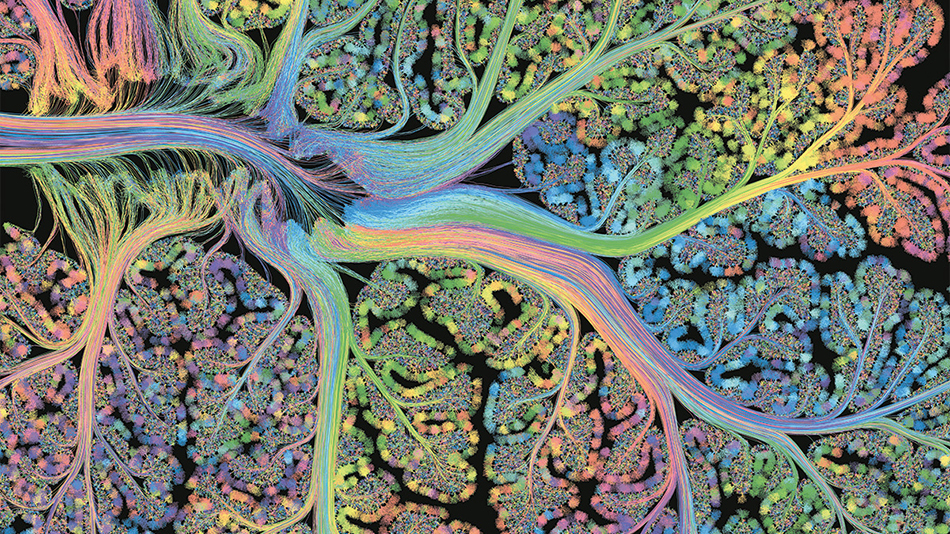
Image by Greg Dunn and Brian Edwards

Promoting Healthy Minds and Society through Psychological Science

The Psychology Department discovers the fundamental principles underlying human behavior and how one can change behavior in ways that enhance our lives and society. Our undergraduate and graduate instructional programs train science-minded students to enter the workforce, and to create new leadership for a better world.

VISIT DEPARTMENT WEBSITE

1,062

Undergraduate majors

EDUCATION

Undergraduate Program

Psychology is among the top departments in undergraduate teaching at the UW. In 2024-2025, the department had more than 12,000 course enrollments and continues to be a leading department offering faculty-supervised undergraduate research. Our students also gain hands-on experience via undergraduate teaching opportunities and a variety of volunteer and internship positions.

The department offers both Bachelor of Science and Bachelor of Arts degrees to satisfy a wide range of student interests. The B.S. program provides greater emphasis on laboratory research and statistics, and as such provides a foundational core for students interested in pursuing careers in research or other fields requiring more laboratory and quantitative training. In 2024-2025, there were 1,071 students enrolled in experiential learning opportunities to further their educational experience through research, fieldwork and peer teaching. The B.A. program provides greater emphasis on applications of general scientific knowledge in psychology and as such provides a foundational core for students interested in a range of careers requiring broad understanding of psychological theories and their application.

Our courses are also popular with non-majors: in 2024-2025, over 1,325 students were enrolled in Psych 101 (Introduction to Psychology). Psych 210 (Diversity of Human Sexuality) is the largest class on campus, offering comprehensive, sex positive, sex education to over 3,500 UW undergraduates each year. Special programs and services for undergraduates include our departmental Honors Program, Writing Center, Statistics and Methods Lab, Undergraduate Study Center, the Psychology Student Mentoring Program, and advising support.

Graduate Program

Our graduate program offers not only traditional doctoral education and research training in various subfields of Psychology, but it also emphasizes interdisciplinary approaches to most effectively address society’s high priority and pressing challenges. Advanced data science, diversity science specialization, and a quantitative minor are also available to students. Our Ph.D. graduates go on to postdoctoral positions in academia, faculty positions, industry, business, law, medicine, and clinical work. The department’s Clinical Psychology Graduate Training Program has been ranked in the top ten programs in the nation for the past ten years, according to U.S. News and World Report.

Master Program

The department’s Master of Arts degree in Applied Child and Adolescent Psychology, based in a bioecological model of child development, provides students with a background in biological, interpersonal, and contextual processes that contribute to child psychopathology. Students are also trained in evidence-based treatments for use with children and families. In addition, they participate in an ongoing clinical practicum placement for the development of clinical skills while they are completing course requirements.
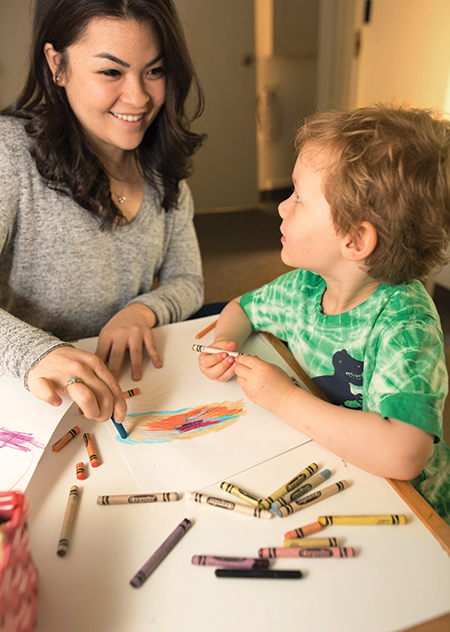
Photo by Colette Cosner

Students

Autumn 2025

  • 1,062 Undergraduate majors
  • 54 Master of Arts students 
  • 86 Doctoral students

Degrees Awarded

Autumn 2024- Summer 2025

  • 536 Bachelor degrees
  • 17 Master of Science degrees
  • 48 Master of Arts degrees
  • 17 PhD degrees

Undergraduate Honors

2024-2025

  • 1 Dean’s Medalist
  • 2 Husky 100 Honorees
  • 12 Mary Gates Scholars
  • 2 Guthrie Writing Prize winners
  • 3 Aric Chandler Scholarship Recipients
  • 8 Ruth H. Hagenstein Awardees
  • 12 James Steele Scholars
  • 23 Honors theses presented

Graduate Student Honors

2024-2025

  • 1 Population Health Grant
  • 1 American Indian and Indigenous Studies Scholar
  • 1 ARC of Washington State Trust Fund Award
  • 1 Graduate School Equity and Excellence Diversity Fellowship
  • 1 Graduate School Equity and Excellence – Graduate Excellence Award
  • 1 Diversity Professional Development Award from the American Psychology Association
  • 1 Jenessa Shapiro Graduate Research Award from the Society of Personality and Social Psychology
  • 1 Graduate Research Award from the Society of Personality and Social Psychology
  • 1 Graduate School Presidential Dissertation Fellowship
  • 1 Marsha M. Linehan Term PhD Fellowship in Clinical Psychology
  • 1 Graduate School Equity and Excellence Dissertation Fellowship
  • 1 Applied Research Fellowship through UW Population Health
  • 1 National Institutes of Health Predoctoral Graduate Research Award
  • 2 National Science Foundation Graduate Research Fellowships
  • 67 journal articles published
  • 2 GSEE Supplemental Award recipients

FACULTY

Winter 2026

  • 18 Professors
  • 1 Research Professor
  • 3 Teaching Professors
  • 9 Associate Professors
  • 2 Research Associate Professors
  • 3 Associate Teaching Professors
  • 8 Assistant Professors
  • 1 Assistant Professor of Clinical Practice
  • 1 Assistant Teaching Professor
  • 1 Acting Assistant Professor
  • 3 Part-Time Lecturers
  • 1 Clinical Associate Professor
  • 80 Clinical Instructors
  • 40 Emeritus Faculty
  • 28 Adjunct Faculty
  • 10 Affiliate Faculty

Faculty Awards & Honors

  • 1 Neuro-Irv and Helga Cooper Foundation Open Science Prize Winner
  • 4 5-year R01 Awards from the National Institutes of Health
  • 1 Institute of Translational Health Sciences (ITHS) Pilot Award
  • 1 Legacy of Service Award from the Washington State Leadership Board (WSLB)
  • 1 Dean's Academy Futurist
  • 1 Early Career Representative of the Section on Psychology for the American Association of the Advancement of Science (AAAS)
  • 1 Chair Appointment at the Addiction Risks and Mechanisms Study Section at National Institutes of Health
  • 1 2024 American Society of Primatologists (ASP Distinguished Primatologists Award
  • Organization for Human Brain Mapping 2024 Education in Neuroimaging Award
  • 1 UW Royalty Research Fund Award
  • 1 Center for Institutional Courage Award
  • 1 Winner of NIH Office of Behavioral and Social Science Research (OBSSR) Matilda White Riley Early-State Paper Competition
  • 1 Lifetime Achievement Research Award from the American Foundation for Suicide Prevention
  • 1 Frontiers of Knowledge Award in Social Sciences
  • 1 Second Place Award in National Council on Family Relations (NCFR) Best Students/Early Career Presentation Award
  • 1 Standing Member for the Social Psychology, Personality and Interpersonal Processes Study Section of the National Institutes of Health Center for Scientific Review

RESEARCH

The strong success of our research programs places Psychology Department research among the top departments in the College of Arts & Sciences in terms of grant and contract awards. Current research initiatives seek to:

Optimize human potential by increasing one’s resilience: in young children and adults, to address mental health disparities, and to aid those who are most vulnerable.

Understand behavior through brain science by discovering how neural networks in our brains are impacted by our behaviors, and how our behaviors impact brain function to bias communication, learning, memory, perceptions, and emotional stability.

Promote social equality by understanding how prejudice and bias develop and can be changed, discovering new approaches that reveal implicit bias and disparities, and solving social justice issues.

Major Research and Graduate Training Areas

  • Adult Clinical
  • Child Clinical
  • Cognition and Perception
  • Developmental
  • Neural Systems and Behavior
  • Quantitative
  • Social and Personality

COMMUNITY RELATIONS AND OUTREACH

The Psychology Department is committed to closing the gap between our research discoveries and their impact on society. Our award-winning graduate training clinic and faculty-directed research clinics and centers use evidence-based research to create innovative therapies and behavioral interventions that promote mental health and improve lives, and that increase the mental health workforce.

We also collaborate with community partners to translate research findings into practices that improve the social, emotional, and cognitive development of children, individuals, and communities. Psychology faculty members also provide workshops and information sessions in schools, companies, and community organizations. We offer community events, including sharing the work of our faculty and other experts from around the world through our annual Allen L. Edwards Public Lecture Series. Through these pathways, we aim to make lasting, positive societal changes that can be shared across the globe.

SUPPORT PSYCHOLOGY

Philanthropic support of the Psychology Department plays a significant role in advancing our mission to promote healthy minds and society through psychological science. By making a gift, you can help promote world-class research, attract and retain the best faculty and students, and train the next generation of leaders in psychology. Visit psych.uw.edu/give to learn more.

CONTACT

Department of Psychology
Box 351525
University of Washington
Seattle, WA 98195
(206) 543-2640
psych.uw.edu

last update: January 2026