-
Your personal information is probably being used to train generative AI models
Artists and writers are up in arms about generative artificial intelligence systems—understandably so. These machine learning models are only capable of pumping out images and text because they’ve been trained on mountains of real people’s creative work, much of it copyrighted. Major AI developers including OpenAI, Meta and Stability AI now face multiple lawsuits on this. Emily M. Bender, professor of linguistics at the UW, is quoted. -
Opinion: To address climate crisis, address the information crisis
"The U.S. National Oceanic and Atmospheric Administration has reported that 2023 is already the most expensive year on record for weather and climate disasters in the U.S., with 23 separate disasters that have caused at least $1 billion each in estimated damages," writes Adrienne Russell, professor of communication and co-director of the UW Center for Journalism, Media and Democracy. -

Kay Tomita Hashimoto's First-Generation Story Remembered
Kay was and remains the ultimate role model for all of her children. Making her way through four years at the UW, graduating, and finding work in journalism in the late 40s and early 50s, only a few years after the end of WWII, were huge accomplishments and showed a lot of grit and determination. For her kids, what was most inspiring was that she never complained about the hurdles she encountered, but faced each day with positive focus.
-
Opinion: Osage's critical legacy beyond ‘Killers of The Flower Moon’
"Killers of the Flower Moon," the Martin Scorsese movie about my people, the Osage Nation of Oklahoma, brings to life the reign of terror we lived through a century ago, as if we were back there on those busy 1920s reservation streets, rubbing elbows with our own ancestors and their murderers. It is a powerful film, vividly and heartbreakingly accurate," writes Jean Dennison, associate professor of American Indian Studies at the UW. -

ArtSci Roundup: Fall Concert with DXARTS, Dance Graduate Research Symposium and more
This week, check out the Fall Concert hosted by DXARTS (Department of Digital Arts and Experimental Media), attend the Dance Graduate Research Symposium, listen to guest composer concerts, and more. October 25, 7:30pm | DXARTS FALL CONCERT: Ritual-Entropy-Storm, Meany Hall Join the Department of Digital Arts and Experimental Media (DXARTS) as they host a Fall... -

I am First-Generation: Andrea Woody
"You belong here. This place will change you and you will change it. I belong here, too, and I am forever grateful for the ways I’ve been changed by the students, staff, and faculty in my part of the UW community." - Andrea Woody, Divisional Dean of the Social Sciences
-
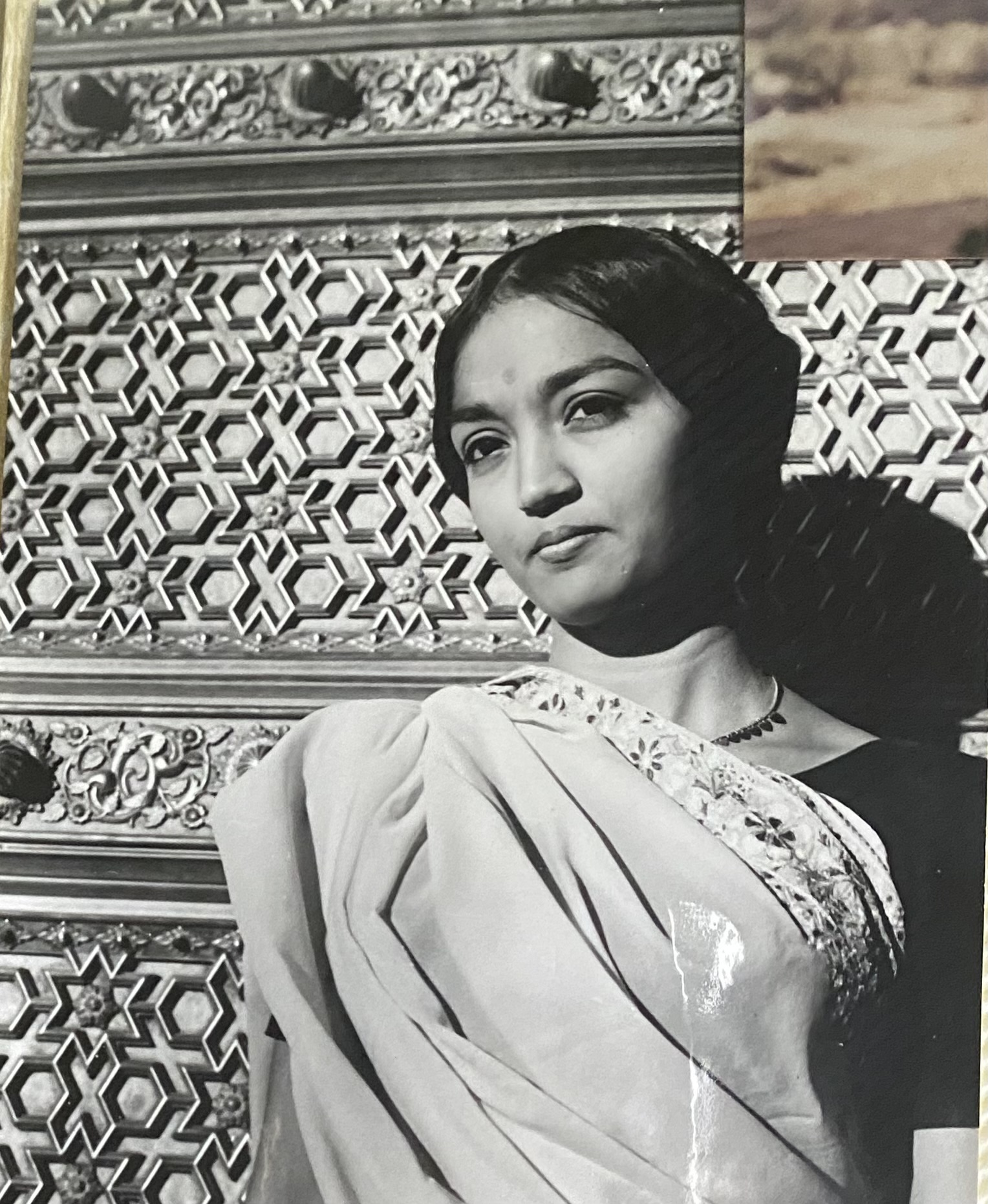
I am First-Generation: Usha Varanasi
"I believe that the journey should be as much fun, and as fulfilling, as reaching the goalpost, which may shift and thereby make life more challenging and interesting. Use the philosophy in this famous quote that 'nothing great is ever achieved without enthusiasm because enthusiasm urges you to do your best.'"- Usha Varanasi (Ph.D., Chemistry, 1968) , UW College of Arts & Sciences Chemistry Professor
-

I am First-Generation: Reneé Diaz
"Stepping out of my comfort zone and embracing the challenges of being a first-generation college student allowed me to leave a strong mark in the Husky community. I am grateful for the experiences and people I encountered along the way. I look forward to continuing my journey in the world of journalism – uncovering and sharing the stories that matter the most." – Reneé Diaz (B.A. Communication: Journalism and Public Interest Communication, 2023)
-

UW’s Chandan Reddy named one of six ‘Freedom Scholars’ for work on race, gender and sexuality
Chandan Reddy, an associate professor of gender, women and sexuality studies and of the comparative history of ideas at the University of Washington, has been named a “Freedom Scholar” by the Marguerite Casey Foundation. -
Understanding the Hamas-Israel war through history and human rights
Israeli strikes on Gaza continue as the conflict between Hamas militants and Israel enters its eleventh day. The Israeli Defense Force now says more than 1,400 people were killed in the Oct. 7 massacre, where Hamas fighters targeted families in their homes, young people at a dance music festival and several Israeli military border bases. Hamas also captured nearly 200 hostages. The dead include Hayim Katsman, who studied at the UW Jackson School of International Studies. The UW's Liora Halperin, professor of history and international studies, and Smadar Ben-Natan, postdoctoral fellow in Israel studies, are quoted.