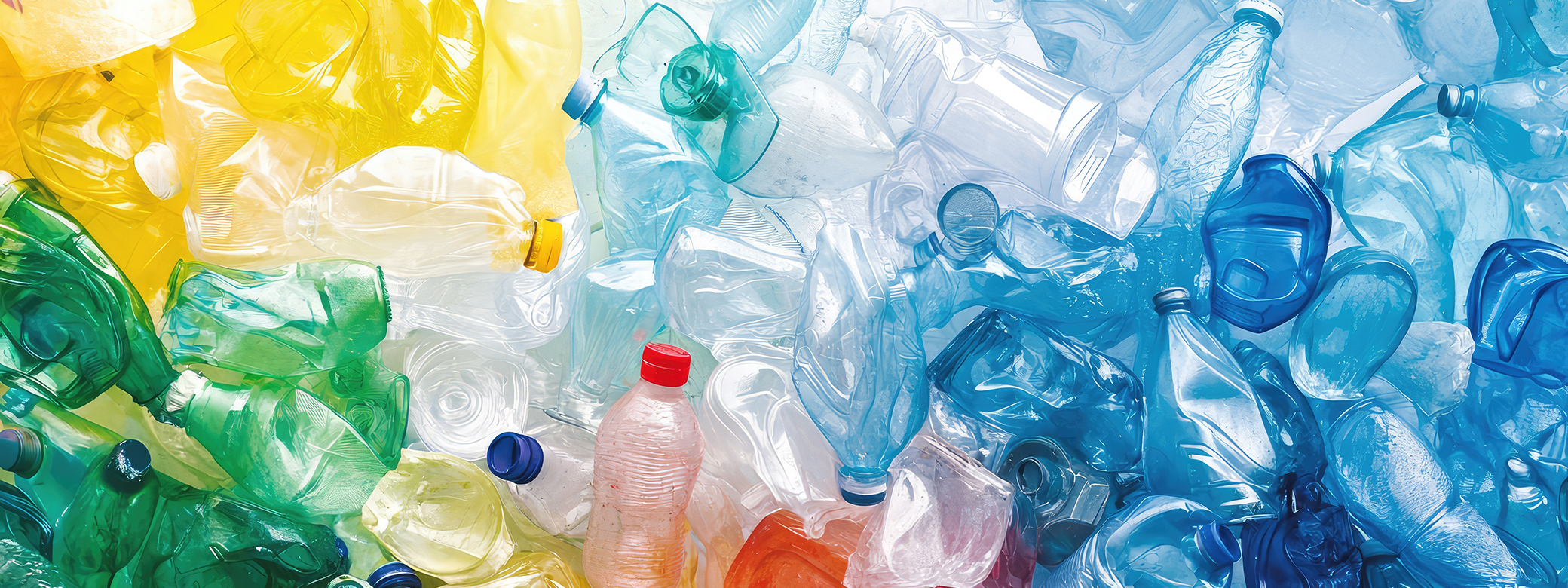
A colorful pile of discarded plastic bottles, sectioned by color (green, yellow, blue, clear).

A Second Life for Plastics

Back to All Perspectives Stories
Nancy Joseph 04/01/2026 April 2026 Perspectives
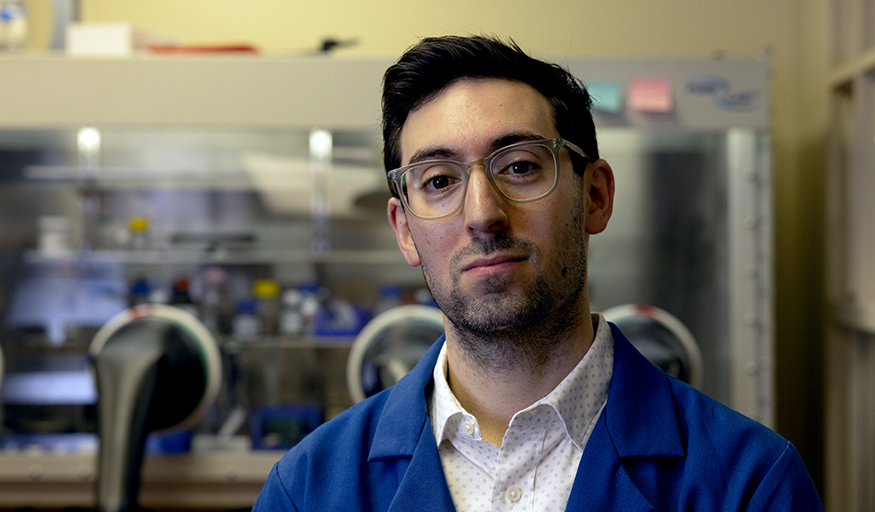
Photo of Matthew Golder in his UW chemistry lab.
“There are tremendous societal benefits to plastic, but thinking about what happens to those plastics once they get to the end of their life is a huge problem,” says Professor Matthew Golder. His research aims to repurpose discarded plastics or otherwise extend their usable life through chemistry. Photo by Juan Rodriguez. 

Plastics are everywhere. From water bottles to storage bags to car tires, they are a part of our everyday lives. And because they are so inexpensive to make, manufacturers have little incentive to recycle them into new materials.

Matthew Golder hopes to change that.

Golder, UW assistant professor of chemistry, is a polymer scientist who explores ways to alter the chemical structure of plastics to keep them out of landfills. His lab has two main areas of focus: repurposing discarded commodity plastics (such as plastic cups, packaging, and tires) into new materials; and — when that’s not feasible — strengthening plastic materials to extend their usable life.

“There are tremendous societal benefits to plastic, but thinking about what happens to those plastics once they get to the end of their life is a huge problem,” says Golder. “Because plastics are very cheap to make, they are very easy to dispose of. My group thinks about how to make those really cheap plastics last longer.”

Polymer Possibilities

To understand Golder’s research, it helps to know the basics of polymer chemistry. All polymers, including plastics, start with atoms bonded together to create molecules. If you continue to bond atoms together, at some point the extremely long molecules they create become polymers.

Depending on the type of atoms involved and the way they are connected, a polymer might be stretchy like a rubber band, malleable like a plastic bag, or rigid like a kitchen utensil. When that plastic item is no longer useful, it will get tossed in the trash. But if the molecular structure of these plastics could be tweaked to alter how they behave, they could be repurposed for other uses and saved from the landfill.

“It isn’t always about completely redesigning the structure,” Golder says. “Our goal is to figure out whether changing little bits and pieces of the polymer chain will change how a plastic behaves.” Much like conventional cooking, this might involve adding ingredients, altering the order or process through which they are combined, heating them at different temperatures, or other changes.

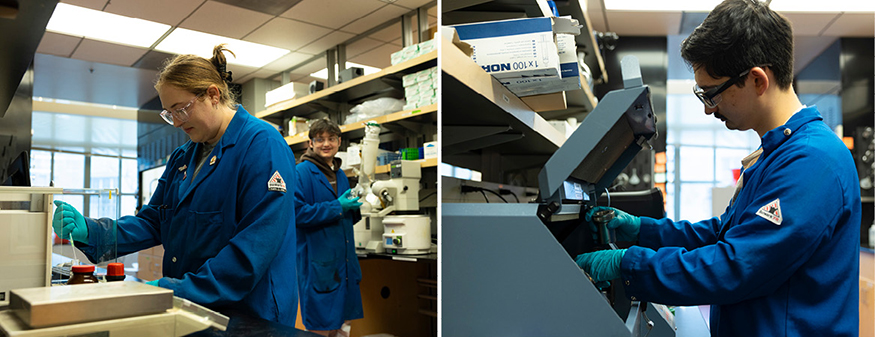
Side-by-side photos of students in blue lab coast working in a chemistry lab.
Scenes from the Golder Lab: At left, Morgan Skala (left) weighs out chemicals while talking with Matt Elardo. At right, Jason Kaff uses the lab's ball mill.  Photo by Juan Rodriguez. 

One barrier to such repurposing has been the cost. The process usually involves solvents, which cost money to acquire and to dispose of after use — a potential deterrent for businesses that might otherwise consider repurposing plastics. But Golder’s team has been experimenting with green alternatives that reduce the need for solvents.

For a recent project, the lab repurposed chip bags into a new material using a technique called ball mill grinding. Chip bag wrappers are particularly hard to recycle because they combine multiple kinds of plastics, dyes, fillers, and metal foil. Yet through chemical manipulation plus grinding in a ball mill — a machine originally intended to crush rocks into very fine particles — the researchers have been able to turn crinkly chip bags into new types of stretchy materials that adhere to glass and other surfaces. The food packaging material was provided by PepsiCo, which funded the project.

“This is a good example of green chemistry, where we’re trying to minimize the amount of solvent that’s used,” says Golder. “We’re not the first ones to do chemistry in these rock crushers, but we’ve been able to apply them to some problems in the plastics community. The rock crusher allows us to basically circumvent all of the waste that is usually generated.”

It isn’t always about completely redesigning the structure. Our goal is to figure out whether changing little bits and pieces of the polymer chain will change how a plastic behaves.

Matthew Golder Assistant Professor, UW Department of Chemistry

The chip bag project repurposed a commodity plastic used in daily life. Some durable plastics, such as those used for automobile dashboards or airplanes components, present a different challenge. Due to their unique chemical structure, they can’t be immediately repurposed. So Golder instead aims to prolong their life by adding molecules to the plastic formulation that can “absorb” energy, ultimately leading to tougher materials.

“That doesn’t keep the plastics out of the landfill forever, but if you can extend their lifetime an extra 15% or 20%, at least you’re able to keep them out of the landfill a bit longer,” Golder says. “And if a company doesn’t have to replace a particular part as often, that’s also better for them. It becomes a win-win.”

Encouraging Creative Thinkers

Golder’s lab has numerous active projects in these two areas – repurposing some plastics and prolonging the life of others -- with support from the National Science Foundation and the Army Research Office. The UW Clean Energy Institute and other UW sources provide additional funding. Golder encourages his research team, made up of about nine graduate students and two or three undergraduates, to follow unconventional ideas where they might lead.

A student wearing a blue lab coat and protective goggles works in a chemistry lab.
Team member Adelle Koenig purifies new polymers in the lab. Photo by Juan Rodriguez. 

“I look for students who are creative thinkers, who come up with ideas I might never think of myself,” Golder says. “Those are some of the best ideas, where the students teach me something.”

Not every idea will work out, but that’s just part of the research process — a lesson Golder imparts to his team.

“I always tell my students, ‘If you can figure out what went wrong and can tweak your next experiment, then it’s not a failed experiment, because you learned something along the way,’” he says.

Golder hopes that advances made through his research will eventually extend the lifecycle of plastics in meaningful ways, though he knows it could be years before work in his lab translates to real-world applications on a larger scale.

“Sometimes things in the chemistry lab work really well on a small scale but become more difficult on a large scale, whether it’s mixing or heat transfer or solubility or side reactions that start to happen,” he says. “So for large-scale use, there would need to be a lot of steps along the way. But the satisfaction of having something we developed at the fundamental level making it into a product that people use — a product that is better than what is already out there — is something I really would love to see.”

More Stories
Professor Nicole McNichols sitting on a bench on the UW campus.

Nicole McNichols Wants to Improve Your Love Life

In her new book, "You Could Be Having Better Sex," psychology professor Nicole McNichols shares frank information based on academic research. 

Johnathan Cox with arms folded, with snowy peaked mountains of Kyrgyzstan behind him.

Through Soil Science, an Adventure in Kyrgyzstan

Chemistry PhD alum Jonathan Cox spent most of 2025 in Kyrgyzstan, helping farmers improve their soil—and their crops—through soil testing. 

UW student Edwin Bai on University Way in Seattle

The Public Impact of Private Cities

Geography major Edwin Bai has researched private cities, developed by individuals and corporations, that  "take the libertarian idea of low government regulation to the maximum." 

Explore Stories Across Arts & Sciences Departments