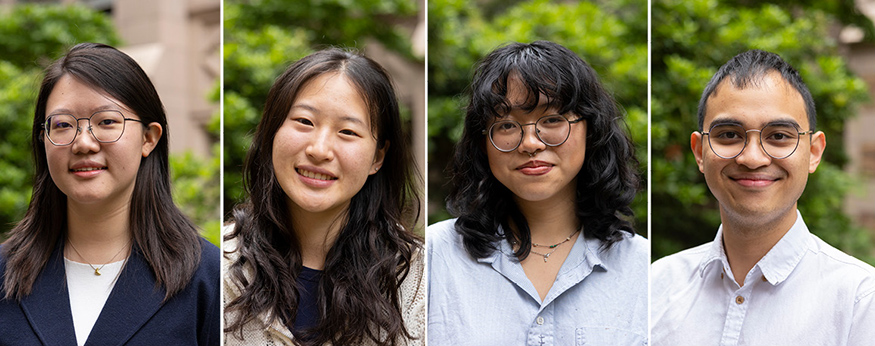
The College of Arts & Sciences’ 2026 Dean’s Medalists have been busy. During their time at the UW, they have co-authored official reports on homelessness, presented humanities research at conferences, published in academic journals, designed gallery exhibitions, explored the far reaches of the universe, and mentored their peers — all while maintaining stellar grades.
Selected from nominations submitted by faculty, the Dean’s Medal honors one graduating senior from each of the College’s four divisions — Arts, Humanities, Natural Sciences, and Social Sciences.
Learn more about our 2026 medalists:
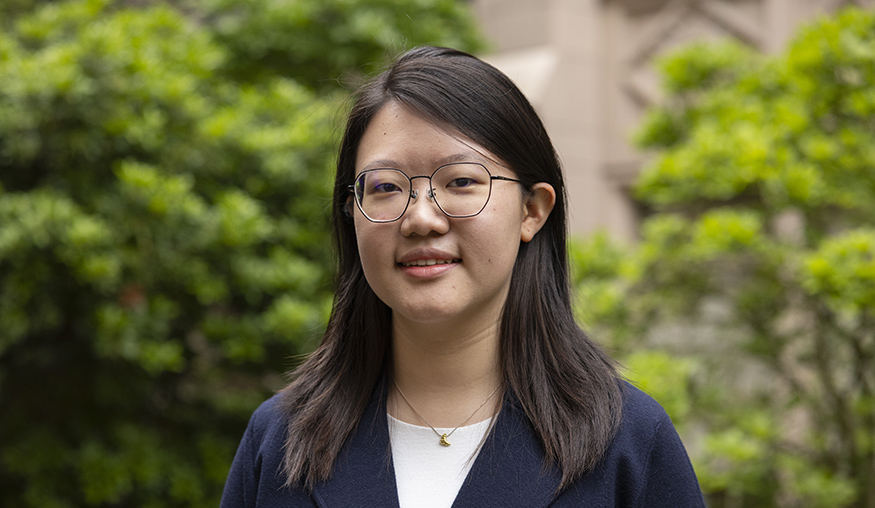
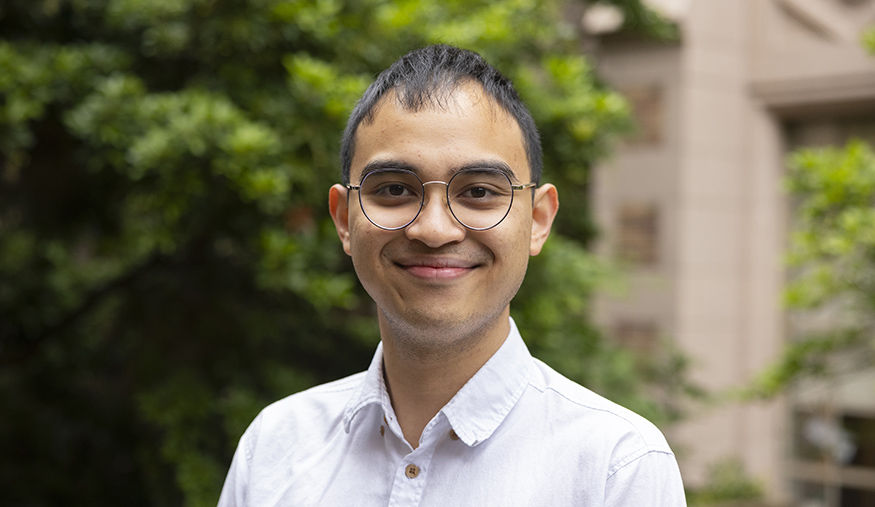
Yuanxi Li, Dean's Medalist in the Social Sciences
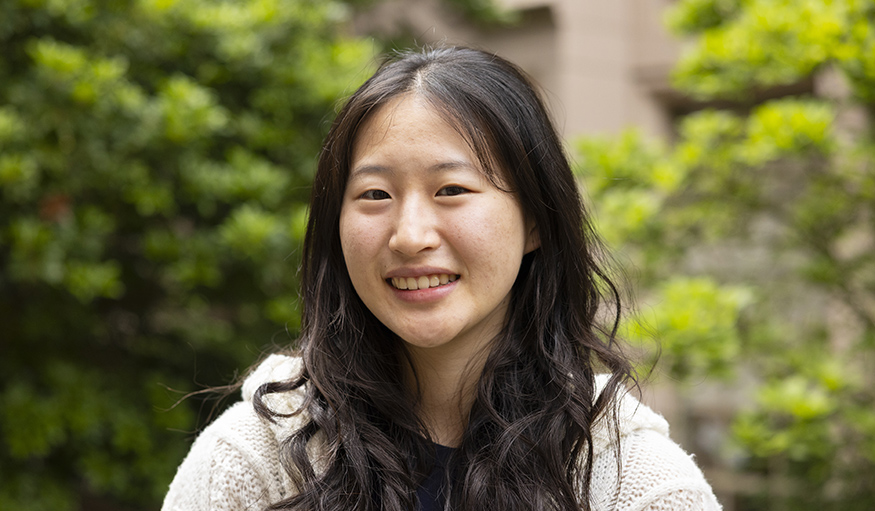
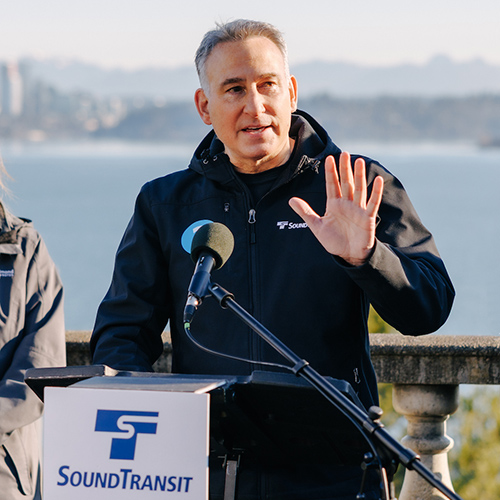
Emily Hao, Dean's Medalist in the Arts
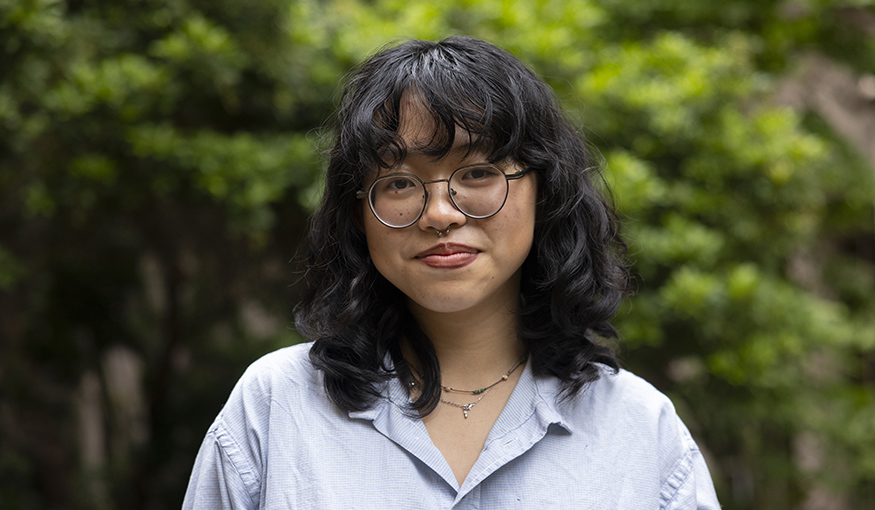
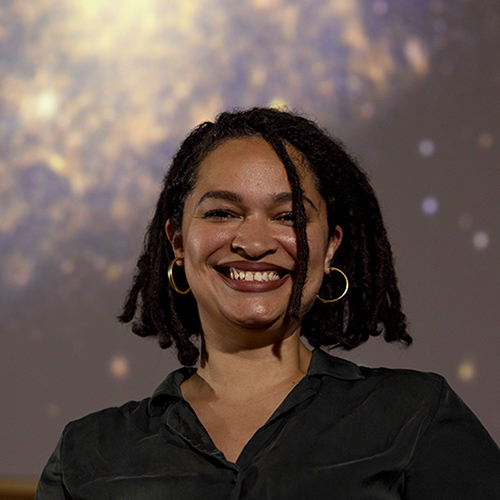
Aileen Kuang, Dean's Medalist in the Humanities
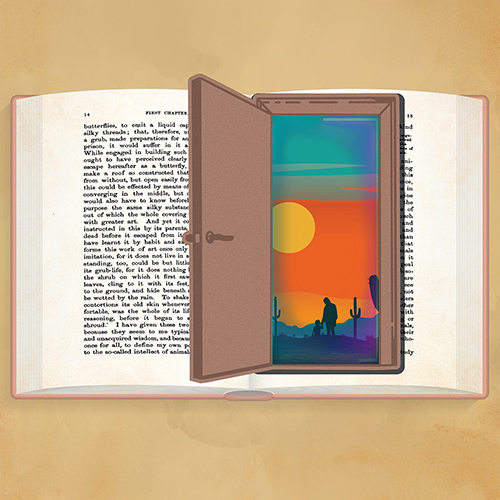
Tanawan (Juneau) Chatchadanoraset, Dean's Medalist in the Natural Sciences
Dean’s Medalist in the Social Sciences
Yuanxi Li
BA WITH HONORS in Sociology; BS, Informatics
In her coursework and research, Yuanxi Li found connections between her two majors, sociology and informatics. She has participated in multiple research projects addressing societal issues, including cyberbullying, gender bias, homelessness, and vaccine hesitancy, and is co-author on five research papers currently under review for publication, in fields ranging from sociology to human-computer interaction.
“What most distinguishes Yuanxi is not simply her academic record but the thoughtful way she approaches learning and scholarship,” says Audrey Dorélien, associate professor of sociology. “She is motivated by the deeper pursuit of knowledge and the challenge of getting it right.”
Li received a Mary Gates Research Scholarship for a project focused on the cyberbullying of transgender teens nearing adulthood. When she presented her findings at the UW Undergraduate Research Symposium, she received a Population Health Recognition Award for innovation and excellence in population health research. After the symposium, Li continued that research, asking professors Rosalind Kichler (Sociology) and Lindah Kotut (Information School) to join her as co-authors. Both enthusiastically accepted.
“I have had a handful of undergraduate students ask about publishing their research,” says Kichler, “but I had never been invited by an undergraduate student to be a co-author on their already developed project!”
I have had a handful of undergraduate students ask about publishing their research, but I had never been invited by an undergraduate student to be a co-author on their already developed project!
For another research project, her Sociology Honors project, Li analyzed the link between online discourse and offline vaccination. The project, which combined large language modeling with advanced regression tools, won first place at Winter Lightning talks, an event of the UW Center for the Studies of Demography and Ecology that is typically limited to graduate students.
Working with the UW Homelessness Research Working Group, Li progressed from logistical support to co-authoring official reports and methods papers. She also volunteered her skills for MisinfoDay, a UW Center for an Informed Public project designed to help high school students develop media literacy, and headed the photography department for the student-run WeGet Magazine. Li also realized a long-standing dream by self-publishing a poetry collection.
Fortunately for the UW, Li will continue at the University as a PhD student in the Department of Sociology and at the Max Planck Institute for Demographic Research in Germany.
Dean’s Medalist in the Arts
Emily Hao
BDes, Visual Communication Design; BS, Informatics; Art History minor
Emily Hao loves design. During her time at the UW, she took a deep dive into visual communication design in her coursework and in projects beyond the classroom, culminating in a role as design curatorial assistant for the Jacob Lawrence Gallery in the School of Art + Art History + Design (SoA+AH+D).
Hao participated in a nine-week Amsterdam-based study abroad program offered by SoA+AH+D’s Art History division, which focused on Dutch art within its cultural and historical context. In an essay about the program, she described how her understanding of museums transformed through that experience. What once seemed boring was now rich with meaning — a realization that would figure into future UW projects involving the Burke Museum and the Jacob Lawrence Gallery.
[Emily's] evolution from technical competence to values-driven practice represented exactly the kind of discovery mindset that transforms good students into leaders.
Back on campus, Hao was design director of the student-run TEDxUofW; she also served as a teaching assistant for an Information School course focused on the Burke Museum, encouraging inclusive design practices. She earned a competitive internship at Amazon as a brand design intern, while also finding time to work with Cheng on a pro-bono design project for Seattle Emergency Hubs, a volunteer organization that activates neighborhoods in the event of an earthquake. Hao followed that with the year-long design curatorial assistant role at the Jacob Lawrence Gallery. Through these many experiences, Hao learned that she is drawn to design work that has a societal benefit.
“Emily discovered that design can address social justice, amplify underrepresented voices, and create more inclusive spaces,” says Karen Cheng, professor of visual communication design. “This evolution from technical competence to values-driven practice represented exactly the kind of discovery mindset that transforms good students into leaders.”
Coming full circle, in her senior year Hao returned to DESIGN 166 — the introductory course for visual communication design students — as a senior student mentor, advising new students and helping foster a supportive design community. Cheng was thrilled to have her back in the DESIGN 166 classroom.
“Emily is smart and talented,” Cheng says, “but what makes her truly exceptional is the integration of these qualities with her kind heart, her sense of wonder, and her commitment to using design to create more equitable and inclusive spaces.”
Dean’s Medalist in the Humanities
Aileen Kuang
BA WITH HONORS IN English; BS, Informatics; Comparative History of Ideas minor
The humanities frequently explore what it means to be human. But Aileen Kuang takes that further, exploring relationships between humans and non-humans, from creations like Frankenstein’s monster and cyborgs to other non-bodied intelligences. By her junior year, Kuang was presenting papers on these topics at academic conferences.
Kuang’s final project for a Department of English “Critical Practice” course, organized around Mary Shelley’s novel “Frankenstein,” explored what it means for Frankenstein’s creature/monster — a creature that is explicitly not human — to be racialized, thinking through the interplay between the categories of human, animal, and machine.
She just brings the room to life, making the conversations collective while elevating the discourse well above the norm for a class at this level.
English professor Jesse Oak Taylor, who taught the course, recalls that Kuang “was simply operating on a different plane and, in the process, really enriched the experience for everyone. She just brings the room to life, making the conversations collective while elevating the discourse well above the norm for a class at this level.”
As a participant in the UW Summer Institute in the Arts and Humanities, Kuang completed an independent research project examining race, species, and technology in the Blade Runner films. She explored the topic further for her Informatics research capstone, analyzing popular science-fiction films to understand how relationships between humans and (dis)embodied robots extend existing forms of relationship that rely on the physical human form. She has two research articles in progress, two more being considered for academic journals, and one published earlier this year, and presented her work at the Science Fiction Research Association Conference at the University of Rochester last summer.
Beyond her research, Kuang has served as an editor for iJournal, the UW Information School (iSchool) student-led journal; been a fellow at the Henry Art Gallery, where she developed an art exhibition audio guide in collaboration with an exhibited artist and the Henry; served as a teaching assistant for courses in the iSchool and the Paul G. Allen School of Computer Science & Engineering; and been a peer mentor at the UW’s Robinson Center for Young Scholars, where she got her start at the UW. She also co-led a public humanities project in the Comparative History of Ideas department, culminating with an interdisciplinary symposium, “University in Community: An Un-Conference.”
Kuang will now pursue a PhD in English at the University of Wisconsin-Madison.
Dean’s Medalist in the Natural Sciences
Tanawan (Juneau) Chatchadanoraset
BS WITH HONORS IN Astronomy; BS, Physics; Data Science minor
Juneau Chatchadanoraset spends a great deal of time thinking about the universe — how galaxies evolve, whether other planets might support life, and other longstanding questions in astronomy. At the UW, he has worked on multiple research projects, leading to co-authorship of two published papers and three more in progress.
For one project with astronomy professor Eric Agol’s research group, Chatchadanoraset worked toward detecting and making mass measurements of Earth-sized planets orbiting other stars to learn more about how planetary systems form, whether another planet might be as temperate as our Earth, and whether we might find signs of life. The research group had found a novel way to characterize these planets but faced inaccuracies when they applied the technique more broadly. Chatchadanoraset addressed those limitations by developing a novel technique to improve mass measurements of exoplanets. He has nearly completed a first-author paper describing the results.
“Juneau is an extremely talented programmer, who put in a significant amount of work on this project while simultaneously earning a near-perfect GPA as well as carrying out research with other groups in Astronomy,” says Agol, who notes that Chatchadanoraset had to pivot to a new programming language, Julia, for the project. “He moved from a novice in Julia, to a competent programmer, to developing a package with tests, documentation, and examples, all in a short time,” Agol says.
In just six months, Juneau went from having no prior experience with galaxy imaging data to becoming an indispensable contributor, operating at the level of a graduate student.
Chatchadanoraset also contributed directly to NASA missions as he assisted Agol with a time-critical analysis related to a new exoplanet discovery. That work helped confirm an observational window with NASA’s James Webb Space Telescope. And he pursued another research project with postdoctoral scholar Aritra Ghosh at the UW’s Institute for Data Intensive Research in Astrophysics and Cosmology (DiRAC Institute), applying machine learning to data from the Rubin Observatory.
“In just six months, Juneau went from having no prior experience with galaxy imaging data to becoming an indispensable contributor, operating at the level of a graduate student,” says Ghosh.
In addition to his extensive research activities, Chatchadanoraset served as an undergraduate grader for introductory astronomy courses and a peer mentor for his fellow undergraduates in the Department of Physics. He will start a PhD program in astronomy at the University of Chicago this fall.
More Stories
Finding Joy in Dance and STEM
“I feel like my experience at the UW has been incredibly well-rounded," says Eddie McClary, who graduates in June 2026 with bachelor's degrees in dance and biochemistry.
Before Med School, A Year in Paris
Graduating with bachelor's degrees in neuroscience and French, Hunter Jung is heading to France for a cognitive neuroscience program that reflects both interests.
Unearthing Clues to Past Lives
Through summer excavations at a former plantation and an anthropology honors thesis, Raquel Matthews is advancing our understanding of the lives of enslaved people who lived there.