When nonprofit organizations receive major donations, it can be a huge boost for their work. But it can also impact their efforts in unintended ways.
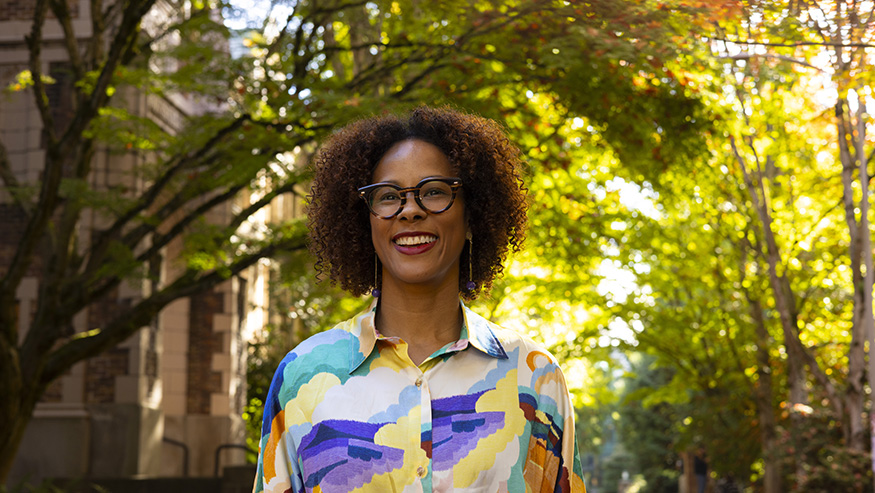
University of Washington professor Megan Ming Francis studies the complicated relationship between philanthropy and social movements, with a particular emphasis on organizations working toward racial justice. Most of her research focuses on the past — how philanthropy impacted and sometimes usurped movements in the 1930s and 1960s — but always with the current moment in mind.
“Many leaders of nonprofits today struggle to keep their organizations afloat without resources,” says Francis, G. Alan and Barbara Delsman Associate Professor of Political Science and associate professor of law, societies & justice. “They are trying to maneuver between appeasing funders that have their own set of priorities while also holding together the important work the organization is doing in the community. That tension, the way philanthropy operates and impacts movements, was also present in the past.”
With Money, a Shifting Agenda
Francis began researching the role of philanthropy in politics about eight years ago, in response to questions she received during talks about her 2014 book, “Civil Rights and the Making of the Modern American State.” The book focused on the NAACP’s campaign around racial violence in the early 20th century; audiences wanted to know why the NAACP’s focus later shifted from racial violence to education desegregation, most notably its role in the Supreme Court’s Brown vs. Board of Education case.
“I was never satisfied with the answers I gave to people when they asked that question, so I went back to the archives to better understand what shifted,” Francis says. “Long story short, I pieced together a story about a radical funder in the early 20th century, the Garland Fund, that was really interested in the issue of education.”
There is the potential for so much good but also the potential for so much harm in this sector.
The Garland Fund became involved in the NAACP’s campaign around racial violence, and then, through grants, helped shift the organization’s predominant focus away from racial violence to education despite the protestations of Black leaders in the NAACP.
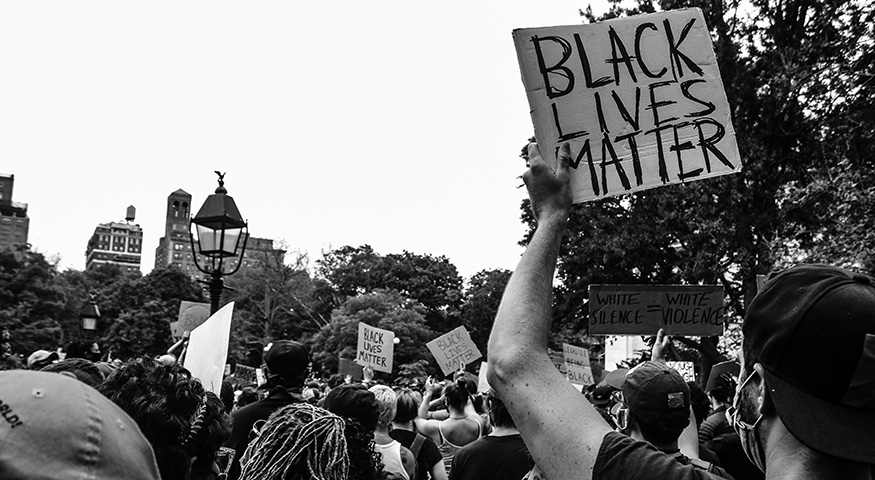
Francis shared her findings in an article published in 2019, coining the phrase “movement capture” to describe how funders can capture and shift the agenda of an organization — particularly a young organization — even if the funders intentions are good. She hadn’t expected much of a response to the academic article, but after the 2020 murder of George Floyd, as the US saw the largest-ever increase in philanthropic giving to racial justice organizations, funders began contacting her for guidance.
So began Francis’s unexpected immersion into the world of current-day philanthropy.
Accountable to No One
Many donors were new to funding racial justice issues in 2020. Some were simply following the latest trend, but some — from major corporations to established foundations to small family foundations — were genuinely concerned about providing support respectfully. They cited Francis’s research in board meetings and reached out to her to learn more. For Francis, it was an opportunity to apply her historical research to pressing current events.
“There are these small windows in our political landscape that provide opportunities to connect your research to something that is bigger than you,” says Francis. “2020 was that opening for me. It was a critical moment to address the real tension that exists when some people hold so much money and another group, without access to resources, is committed to building a better world. How do we make sure that racial justice organizations get access to that capital, and that those who have all that capital don’t misuse it in a way that harms the important racial justice or democracy-building work that actually happens?”
Through conversations with philanthropists and racial justice leaders, Francis gained more perspective. She notes that political scientists often think of money in politics through the lens of lobbyists, but she believes the role of philanthropists should not be underestimated.
There are these small windows in our political landscape that provide opportunities to connect your research to something that is bigger than you. 2020 was that opening for me.
“There is the potential for so much good but also the potential for so much harm in this sector,” Francis says. “With lobbying, there are rules. Lobbyists are sometimes made to account to members of Congress, and members of Congress are accountable to constituents. But philanthropists are accountable to no one, and they make these consequential decisions about what organizations are allowed to exist in our world and what ideas are possible, whether that is a charter school or the wing of a museum or AI literacy. There’s a lot of power to set the conditions, to set the agenda.”
Learning from the Past
Of course, organizations can choose to pass on philanthropic gifts that veer too far from their intended mission, and they sometimes do. But that’s not easy when an organization is struggling to survive.
Large gifts are also no guarantee of long-term support. Sometimes a major disruption, like George Floyd’s murder, leads to an influx of gifts from donors with no sustained interest in an organization’s work. Before long, the donors shift to other hot-button issues, leaving the organization in a precarious position. “That does not provide the conditions for success of an organization doing really important democratic work,” says Francis.
Inspired by her conversations with philanthropists and racial justice nonprofits, Francis is now researching philanthropy during the period following the Civil Rights Act and Voting Rights Act in the mid-1960s, an era with some similarities.
“For the most part, we tell a story about the aftermath of the civil rights movement in this country that is absent of philanthropy,” she says. “But I have a sense that funders, a few specific foundations, had a big role to play in the consolidation of a specific civil rights strategy.”
Francis believes that this research, like her previous NAACP research, will help inform decisions made by current-day philanthropists.
“It was being so interested in the present moment and trying to figure out how I can be the most helpful that led me to this topic,” she says. “I feel I can be the most helpful by pushing that thread back further into another pivotal moment, that 1960s moment. I believe with my whole self that understanding the past is crucial to understanding the present.”

More Stories
A Career Spent Shaping the Puget Sound
UW Regent Dow Constantine, who has three UW degrees, was Washington's longest-serving King County Executive and now leads Sound Transit as CEO.
Massive Galaxies & Mentorship
Astronomy professor Arianna Long studies some of the most massive and extreme early galaxies and mentors future generations of scientists.
The Humanities, at a Site Near You
Humanities 103, part of the Humanities First program for first-year students, emphasizes place-based learning through thoughtfully designed field trips.