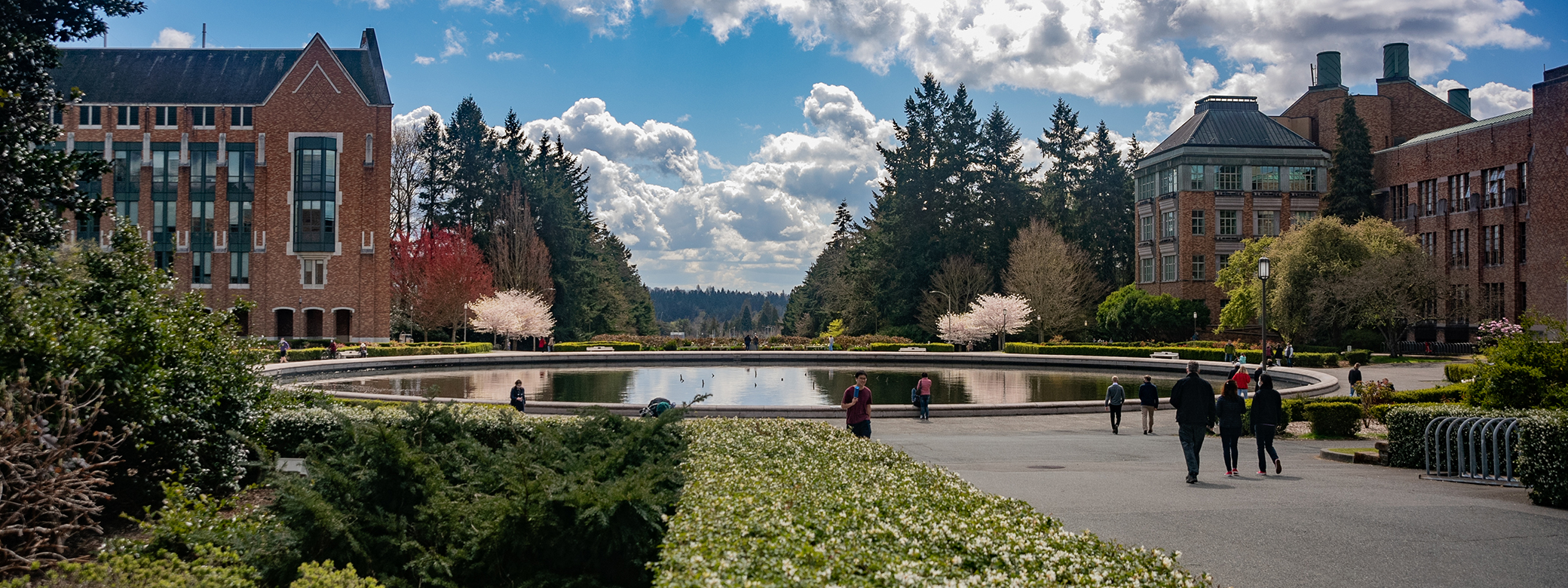
UW campus with Drumheller Fountain and buildings

A Look Back with Dean Harris

Back to All Stories
04/16/2026
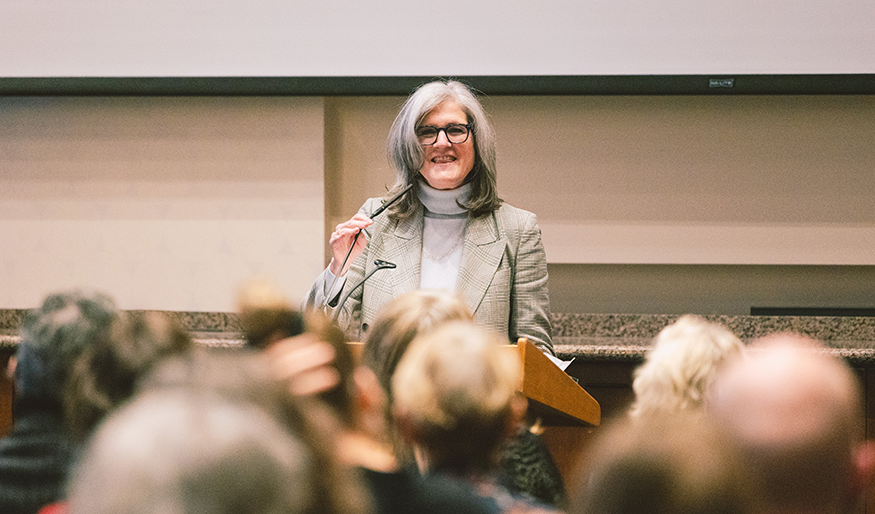
Dean Harris speaks onstage with David Staley.
Dean Dianne Harris speaks with David J. Staley, professor of history at The Ohio State University, at the fourth annual “Big Read” on October 21, 2025. 

After five years at the helm of the College of Arts & Sciences, Dianne Harris, the Katherine and John Simpson Endowed Dean, will step down from her position when her term ends June 30, 2026. She spoke with Perspectives to reflect on her time with the College, the initiatives for which she is most proud, and the enduring value of the liberal arts. 

What accomplishments or initiatives are you most proud of from your time at the College of Arts & Sciences? 

I came to the UW with a deep interest in and commitment to values-enacted leadership, a long history of creative collaboration across disciplines, and a strong belief that higher education was in need of transformation. Rethinking the Academy was the vehicle for enacting some of that work at the UW. Its three pillars—creating community, solving near-term problems using creative new processes, and futurist experimentation—were all underpinned by the establishment of the Guiding Principles that we adopted in the dean’s office and shared with the college. As part of that initiative, our faculty defined the challenges they wanted to work on in the coming years. Several of these ideas, including improving support structures for department chairs and creating a mentoring system, have already been implemented and are making an impact on the College.

It was also my pleasure to support the innovative, creative early career work led by Kevin Mihata in our gesture lab and in the College Edge program, which has become a space for experimental pedagogies for first-year students. In the area of early career work, we also have curriculum for a pre-health pathways minor in development that has potential to serve student demand and the state’s workforce needs.

Dean Harris speaks with admitted Arts & Sciences students and their families on Admitted Student Day.

In my career prior to the UW, I dedicated decades to supporting the humanities broadly and generating enhanced research support and infrastructure for those disciplines. I’m pleased that I was able to carry that forward with me to the UW to build out our research infrastructure in the college with support from Senior Associate Dean Xiaosong Li, and to ensure that faculty in our college can accept prestigious, national fellowships in ways that were not previously possible.

I am very proud that the position of Associate Dean for Equity, Justice and Inclusion, now held by Maya Smith, was created during my tenure. I came to the UW after initiating a significant grant-making program at the Mellon Foundation to fund Native students and faculty nationwide, and I am pleased that I was able to continue that support here by authorizing a cluster hire in American Indian Studies which resulted in a set of spectacular hires and further positioned our department as one of the best in the nation.

The next Dean will be left with an extraordinary investment thanks to the Katherine and John Simpson Endowed Deanship, a gift made possible by the work of our Associate Dean Kevin Thompson and his Advancement team. We have also received an incredible investment in the future of Chemistry teaching and research from the Washington State Legislature. These investments will have positive impacts that last for generations. Meeting and getting to know the remarkable people who make these gifts possible has been a true source of joy.
These are the kinds of big, “shiny” accomplishments I can point to during my tenure. The truth is that there are also myriad behind-the-scenes transformations that every dean works to develop. This might include securing housing for new scientific instruments; forging relationships with new partners in support of faculty research; filling college leadership positions and helping those leaders succeed; finding ways in lean times to enhance our operational infrastructure; and finding ways to move the college’s budget towards a more sustainable future. These things matter, they take time, and they tend to have positive durability. They result from the outstanding work and collaboration of extraordinary colleagues who can and should also claim these as their own accomplishments.

I came to the UW with a deep interest in and commitment to values-enacted leadership, a long history of creative collaboration across disciplines, and a strong belief that higher education was in need of transformation.

Dianne Harris Dean, UW College of Arts & Sciences
portrait of Dianne Harris

What will you miss about the College?

I will miss the wonderful, kind, smart, hard-working, creative people—faculty, staff, and students—throughout the college. Their work inspires me and reminds me on a daily basis (to quote one of our Guiding Principles) why we are here. I’ll also miss my phenomenal dean’s office colleagues. They bring their “A” game and a keen sense of humor to the office every day, through thick and thin, and I’ll miss them very much.

What do you think the future of the liberal arts looks like? How can liberal arts degrees continue to remain valuable in our current moment and beyond?

With the rapid development of publicly available AI platforms, this is a particularly interesting time to consider this question. The CEOs of some of the largest tech companies and other financial forecasters have made public statements about the renewed importance of liberal arts in an AI-infused era. I believe they are correct, but I also know that the liberal arts have always been essential for success in the workforce, and for broader concerns like securing a flourishing democracy. As applications to computer science programs decline nationwide, students may well seek liberal arts degrees in greater numbers. Our task is to be ready to meet them, not by rejecting the technological future, but by educating our students in AI’s ethical, creative, and intelligent use, and to do so in ways that will benefit not just them, but society at large.

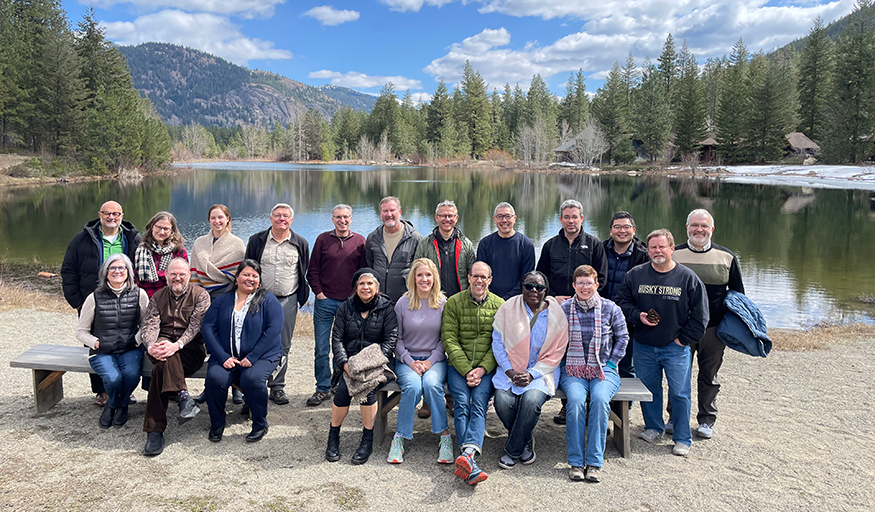
Dean Harris (center) and members of the Dean's Academy Futurists on a visit to Friday Harbor Labs.

We also need to engage in pedagogical innovation of the sort that the Dean’s Academy Futurists have been exploring alongside many of our faculty. We need to do more to emphasize imaginative thinking and creative problem-solving, teaching our students how to frame the most important problems they will face in their careers and beyond. We need to explicitly educate them in productive risk-taking as they work towards imaginative solutions. If we are to make good on the promise of a four-year degree, we need to do a better job of ensuring connections to future employment and to the kinds of positive personal transformation that only we can offer.

Any thoughts or words you’d like to share with the College community?

The past few years have been unusually challenging both at the UW and at higher education institutions nationwide. We are being tested, and we must find ways to remain resilient while also being responsive to the fact that institutional stasis is not an option. To find a way forward, I believe we must remember—as the poet Joy Harjo writes in her poem “Emergence”—to “think in beautiful.” We need to practice our commitment to finding joy in our work and to remember why we are here; to stay committed to finding the brightest ideas even when they are uncomfortable, unfamiliar, or untested; and to seek community even under the pressure of deep disagreement and fragmentation. These things are not easily done, but I feel certain that this extraordinary University of Washington community can and will do them.

I have had the pleasure of meeting extraordinary people during my time at the University of Washington. I have enjoyed the privilege of being part of a college full of individuals who care deeply about their work, who are committed to excellence in the face of challenges, and who find goodness and joy in learning and in helping others to learn, discover, and create. I have had the honor of learning from those around me, of watching them meet the challenges of the moment with grace, resilience, generosity, and sustaining humor. I am immensely grateful for these gifts and hope that I have adequately shared them in return.