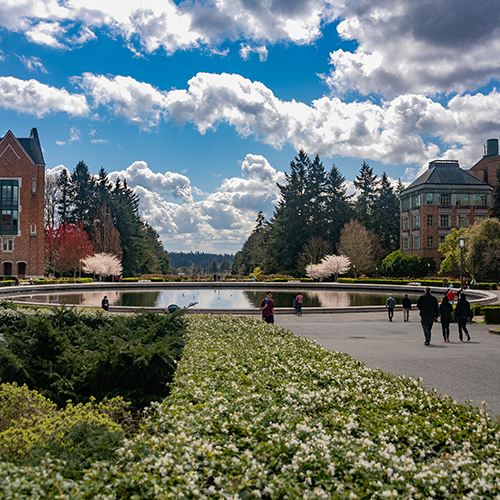
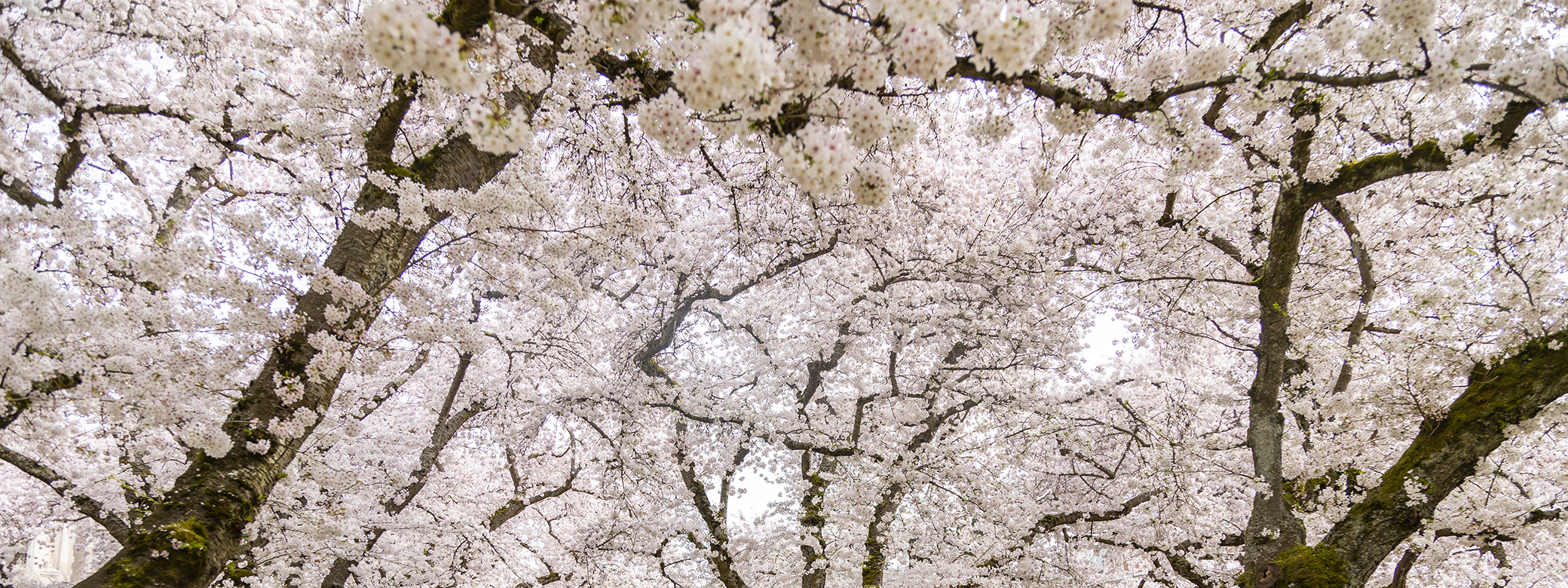
Cherry tress on the UW quad.

Meet Our 2026 Graduate Medalists

Back to All Perspectives Stories
Nancy Joseph 06/26/2026 July 2026 Perspectives
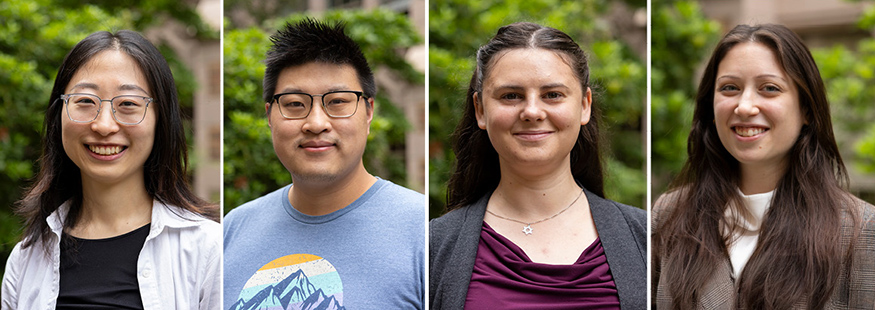
Separate headshots of the four 2026 Graduate Medalists for UW College of Arts & Sciences
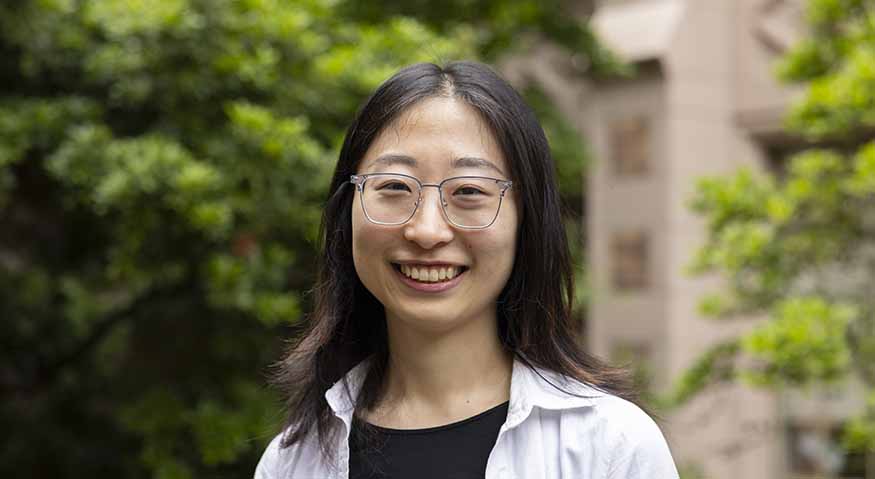
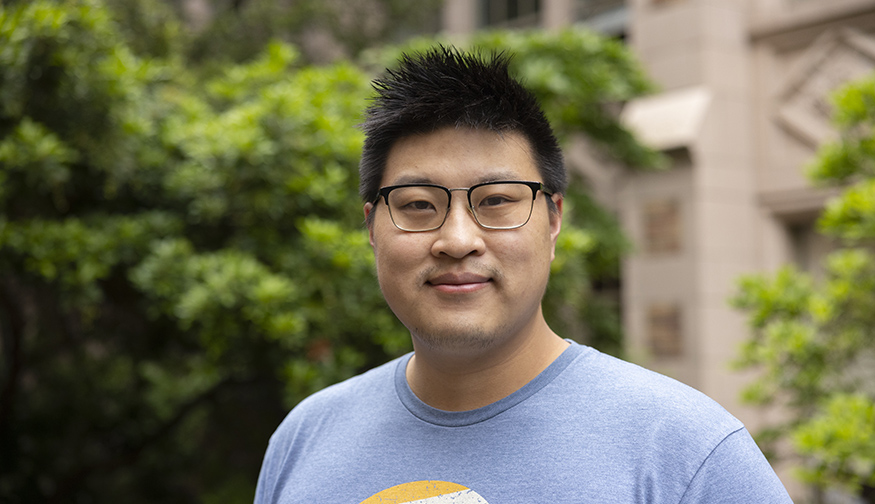
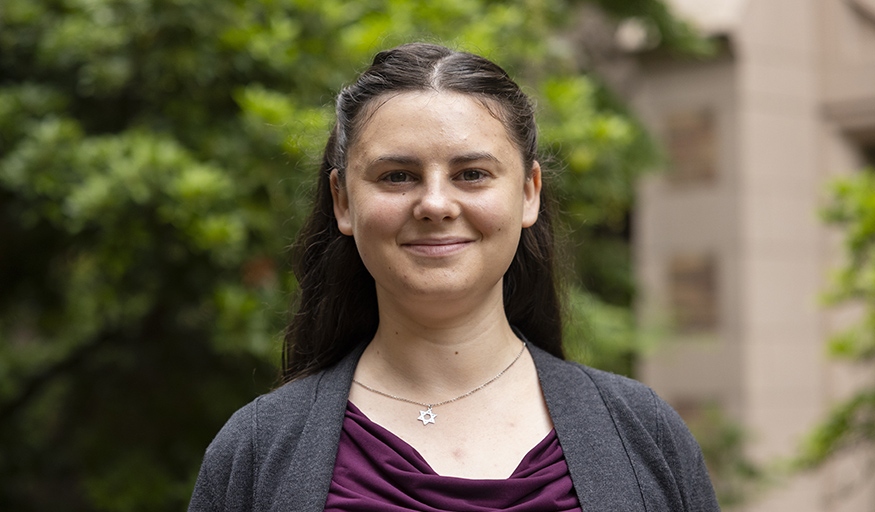
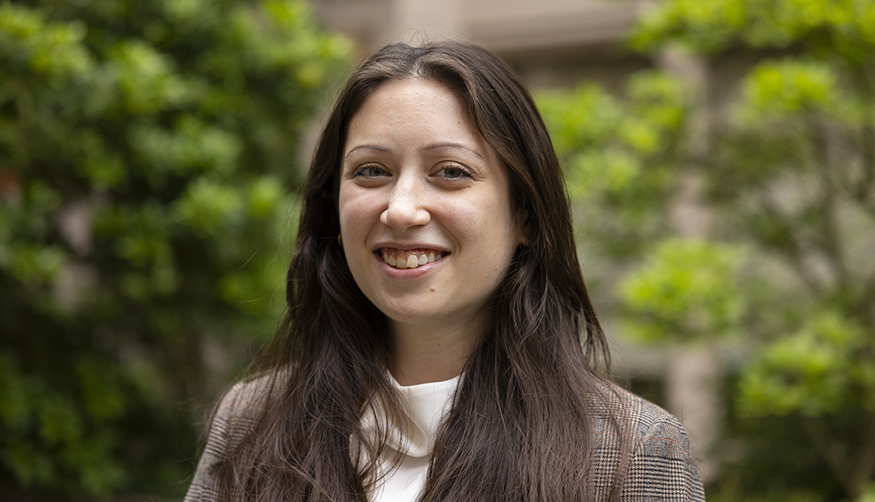
2026 Arts & Sciences Graduate Medalists (from left) Yeonshin Kim, Alexander Hsu, Laura Harris, and Amanda Kunkle. Photos by Juan Rodriguez. 

Every June, the College of Arts & Sciences presents its Graduate Medal to four exceptional students completing their graduate studies. Recipients are chosen based on faculty nominations, with a medal awarded in each of the College’s four divisions — Arts, Humanities, Natural Sciences, and Social Sciences. Congratulations to our 2026 honorees!

Learn more about our medalists:

Yeonshin Kim, Graduate Medalist in the Arts
Alexander Hsu, Graduate Medalist in the Natural Sciences
Laura Harris, Graduate Medalist in the Humanities
Amanda Kunkle, Graduate Medalist in the Social Sciences

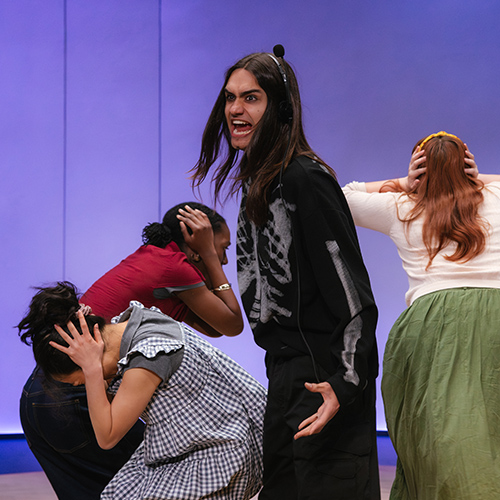
Yeonshin Kim on the UW campus
Praising the expansive interests and talents of Yeonshin Kim (above), School of Drama professor Jeffrey Fracé writes, “In 18 years of teaching graduate students in the School of Drama, I’ve never encountered anyone like Yeonshin Kim." Photo by Juan Rodriguez. 
Graduate Medalist in the Arts
Yeonshin Kim
MFA, Acting, School of Drama

During her time in the School of Drama’s Professional Actor Training Program, Yeonshin Kim performed in eight UW drama productions, from classics like “The Seagull” to contemporary and emerging works. She came to the UW with experience in acting, dance, choreography, and playwriting, all of which informed her UW performances.

“In 18 years of teaching graduate students in the School of Drama, I’ve never encountered anyone like Yeonshin Kim,” writes Jeffrey Fracé, associate professor of drama and co-head of the acting program. “We have had graduate actors excel in craft, or in experimentation; in interpreting classic works, or in exploring the avant garde. Some direct their energies to the commercial side of the industry, some to making ‘art for art’s sake.’ …I didn’t think a single student could encompass all of these poles in their training. Ms. Kim has proven me wrong.”

Fracé notes that Kim’s artistic research is at once personal, political, and cultural. Playing the outsider character of Blanche Dubois in Tennessee Williams’ "Streetcar Named Desire," Kim brought her lived experience as immigrant and researched trauma-related addictive behaviors. For an independent study project, she explored how Shakespeare’s historical mythical archetypes can live inside a contemporary Korean woman’s body. As part of her thesis project, she researched Korean shamanism and other Korean performance practices, leading to an original 20-minute solo show at the UW’s Glenn Hughes Penthouse Theatre.

To add to her performance arsenal, Kim attended a summer Stunt School and took classes in commercial dance in the UW Department of Dance. She also taught dance classes at the UW’s IMA (Intramural Activities Building) to help make ends meet.

“She has done all this while being an exemplary ensemble member in a cohort of eight graduate actors, and a reliably consistent source of enthusiasm, dedication, and creativity in the classroom and studio,” writes Fracé. “She has enriched our lives and work with her presence at the School of Drama.”

Alexander Hsu on the UW campus
“Over the years we have worked together, he has taught me as much as I have taught him,” Bamdad Hosseini says of graduate student Alexander Hsu (above). Photo by Juan Rodriguez. 
Graduate Medalist in the Natural Sciences
Alexander Hsu
PhD, Applied Mathematics

Alexander Hsu came to the UW with an interest in the mathematical foundations of machine learning and data science. That interest has led to research collaborations on a broad range of problems in data science and applied mathematics, including algorithms for scientific machine learning, optimal transport theory for generative modeling, and applications for global health.

“Alex is one of those unique applied mathematicians who have a strong command of theory and computation at the same time,” writes Bamdad Hosseini, assistant professor of applied mathematics and one of Hsu’s collaborators. “He can prove theorems and live-code an algorithm in the same meeting. This is clearly reflected in the breadth of his research projects.”

Collaborating with Hosseini on a project focused on optimal transport (the problem of transforming one probability distribution into another), Hsu’s published findings have already been cited 23 times by other authors who have largely based their work on the results he proved. When Hosseini told Hsu about a seemingly intractable problem he was having with another research project, Hsu returned with a solution a few weeks later. “He managed to obtain some truly remarkable results and solved some problems that were impossible before,” Hosseini says.

Hsu has also shared his expertise in a long collaboration with the Institute for Health Metrics and Evaluation (IHME), a leading organization focused on delivering scientific and data-driven evidence to improve health policy and practice around the world. All this while serving as a teaching assistant in mathematics and applied mathematics, presenting invited talks at seven conferences, and authoring or co-authoring numerous publications.

“Alex is an amazing student whose career will have a profound impact on science as a whole,” writes Hosseini. “Over the years we have worked together, he has taught me as much as I have taught him.”

Hsu recently accepted a position as an instructor at the Courant Institute at New York University, among the top postdoctoral positions in applied mathematics. He also has received an NSF Mathematical Sciences Postdoctoral Research Fellowship.

Laura Harris on the UW campus
Classics professor Sarah Levin-Richardson says that the doctoral research produced by Laura Harris (above) "will be a vital resource for anyone teaching gender or sexuality courses.” Photo by Juan Rodriguez. 
Graduate Medalist in the Humanities
Laura Harris
PhD, Classics

Roman literature has been studied for millennia, yet there is still more to discover. For her Department of Classics dissertation, Laura Harris explored a topic rarely mentioned in classics research: asexuality in antiquity. Her study of ancient Roman poetry and its translation in other time periods shows the deep roots of gender and sexual identities that exist outside societal norms.

“Laura’s dissertation focuses on key examples of characters in Roman literature who are ‘asexually resonant’ (a usefully labile term that bypasses the thorny problem of ascertaining sexual identities in the past),” explains Sarah Levin-Richardson, associate professor of classics and a member of Harris’s dissertation reading committee. “She shows that asexuality was not necessarily incompatible with masculinity, motherhood, or heroism. The end result is a critical intervention in the study of Roman culture and literature and in sexuality studies more broadly.”

The dissertation’s final chapter looks at the historical and political climate of the time, including political reforms instituted by Emperor Augustus to return Rome to “traditional” values, including penalties for not marrying and benefits for producing children. Asexuality in antiquity has real stakes in today's political climate, 2,000 years later.

In addition to her groundbreaking research, Harris has been a dedicated teacher and mentor. She has taught ancient Greek and Latin courses and a course about sex, gender, and representation in the ancient world. She was also part of the teaching team for a Classics Department study abroad program in Rome.

Last summer, Harris initiated a three-session series of online workshops on queer theory for an audience of fellow classicists, with more than 75 people attending. She is now contributing a module on asexuality for The Deltos Project, an online open-access platform for teaching materials on antiquity — important developments for expanding classics scholarship and teaching.

“Given that there is currently no scholarship on Greek or Roman asexuality, this will be a vital resource for anyone teaching gender or sexuality courses — including me,” says Levin-Richardson.
Amanda Kunkle on the UW campus
“Her dissertation pushes forward an important and timely topic in novel ways,” anthropology professor Dan Eisenberg says of Amanda Kunkle (above). Photo by Juan Rodriguez. 
Graduate Medalist in the Social Sciences
Amanda Kunkle
PhD, Biological Anthropology

Why is ADHD (Attention-Deficit/Hyperactivity Disorder) such a common diagnosis today? A frequently suggested but rarely tested hypothesis is that the traits that result in ADHD today were beneficial for our hunter-gatherer ancestors. In her anthropology dissertation, Amanda Kunkle tests this hypothesis using a diverse set of mixed methods, including molecular genetics testing, in-depth interviews, and data analysis, with support from a National Science Foundation Graduate Research Fellowship.

“Amanda’s results have implications not just for understanding the evolutionary roots of ADHD but also for more empathetically embracing neurodiversity and finding ways for those with ADHD to best succeed in our society,” says Dan Eisenberg, professor of anthropology and adjunct professor of biology.

A central part of Kunkle’s dissertation is a series of 18 interviews of people with ADHD to better understand their lived experiences and aspects of their ADHD that they feel are beneficial. The final chapter analyzes national data about the careers of people with ADHD, to see if the perceived benefits of ADHD are reflected in the occupations they choose. Kunkle has presented her research at top conferences in her field and currently has six peer-reviewed publications about her work.

“Biological anthropology is a particularly interdisciplinary field, but Amanda’s dissertation research stands out as exceptionally interdisciplinary to a degree I have never encountered before,” says Eisenberg. “She draws on methods from biological anthropology, cultural anthropology, psychology, psychiatry, evolutionary biology, and genetics, and she has a correspondingly diverse set of mentors to support this work.”

Kunkle is also a skilled teacher, earning high praise from faculty who count her among the best teaching assistants they have supervised. Additionally, she has served as a student representative on a tenure track faculty search committee, and as the Anthropology Department’s biological anthropology graduate student representative, all while producing a dissertation that expands our understanding of ADHD.

“Her dissertation pushes forward an important and timely topic in novel ways,” says Eisenberg. “It should ultimately provide helpful recommendations and destigmatization for those with ADHD.”

More Stories

Eddie McClary does a high kick while lifting a red stool overhead during a dance performance.

Finding Joy in Dance and STEM

“I feel like my experience at the UW has been incredibly well-rounded," says Eddie McClary, who graduates in June 2026 with bachelor's degrees in dance and biochemistry. 

Two people excavating a shallow section at an archaeological site.

Unearthing Clues to Past Lives

Through summer excavations at a former plantation and an anthropology honors thesis, Raquel Matthews is advancing our understanding of the lives of enslaved people who lived there. 

Hunter Jung in a research lab, with shelves of lab equipment on either side of her.

Before Med School, A Year in Paris

Graduating with bachelor's degrees in neuroscience and French, Hunter Jung is heading to France for a cognitive neuroscience program that reflects both interests.