
As you think about winter 2027 course registration, check out these unique Arts & Sciences offerings. They’re open to all students, have no prerequisites, and fulfill Areas of Inquiry requirements as noted.
Abbreviations for Areas of Inquiry: A&H (Arts & Humanities), SSc (Social Sciences), NSc (Natural Sciences), DIV (Diversity), Reasoning (RSN), W (Writing Option).
The Stories We Tell
Society & Change
Sex & Gender
Exploring Creativity
Past & Present
Health & Wellness
First Steps in STEM
More Cool Courses
The Stories We Tell
Literatures of the Arctic
SCAND 355 / ARCTIC 308
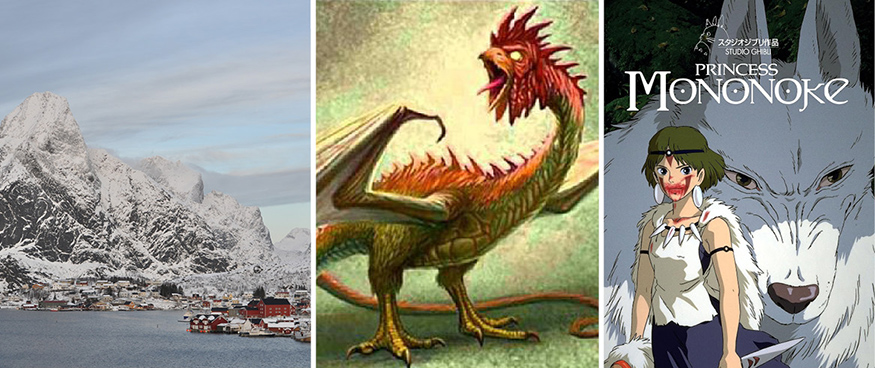
The Arctic has been in the news a lot lately, but few people from more temperate regions of the world really know who lives there, how they thrive, and what kinds of challenges they face. Through literary and cinematic representations of the Arctic in works by Scandinavian, Sámi, North American (including Alaska Native and Inuit), and Greenlandic writers, this course offers a view into the various ways people both within and outside of the Arctic "imagine" the region.
Andy Meyer, Scandinavian Studies
5 credits, A&H / SSc / DIV
Classical Mythology in Film
CLAS 432 / GLITS 314 B
Christopher Nolans’ “The Odyssey” is just the latest in a long tradition of films based on classical myths. In this course, you will compare and discuss classical myths and modern films inspired by them, including some of the coolest epic movies of the last 50 years.
James Clauss, Classics
5 credits, A&H
American Indian and Indigenous Storytelling
AIS 305
Explore American Indian and Indigenous storytelling and oral traditional knowledge, with particular emphasis on the Coast Salish tribal groups of western Washington, where the UW is situated. Through hearing, reading, interpreting, memorizing, and sharing traditional stories, myths, and legends, you will learn how stories impart concepts, values, morals, science, history, beliefs, and philosophies. Taught by two experienced storytellers, one local and one from Cherokee Nation.
Chris Teuton and Roger Fernandes, American Indian Studies
5 credits, A&H / DIV
Existentialism and Film
PHIL 149
Angst, despair, freedom, and a talking horse. Read Kierkegaard, Nietzsche & Beauvoir and watch a dozen films and shows from Princess Mononoke to BoJack Horseman to answer: What makes life worth living? Start the quarter writing about what gives your life meaning and end it writing your own personal philosophy. In between, you’ll test what philosophers claim against modern research on happiness and meaning, and you’ll make your own director’s-commentary-style video on a film. No background in philosophy needed, just questions about how to live.
Ian Schnee, Philosophy
5 credits, A&H, SSc, W
Mythical Figures and Cultural Formations
ANTH 368
Why do monsters endure across cultures and centuries? This course explores mythical figures through an anthropological lens, inviting students to explore some of humanity’s most fascinating stories while uncovering what they reveal about fear, illness, violence, morality, and social change. Students will investigate the historical specificity and cultural meanings of myths, with an emphasis on how myths intersect with medicine and public health, revealing deep-seated anxieties about purity, contamination, and vulnerability.
Paula Saravia, Anthropology
3 credits, SSc
Society & Change
Contemporary International Problems
JSIS 201
Why is the global order changing? Explore the US-led world order after World War II and today’s major conflicts, including Ukraine, Iran, Israel-Palestine, and US-China relations. This newly redesigned course will transform how you explore and understand the key concepts shaping our world today.
David Bachman, International Studies
5 credits, SSc / W
Dangerous Ideas: Social Transformation in Context
GWSS 100
The past few years have witnessed a striking escalation in contests over what kinds of ideas are permitted in public discourse and in which contexts. Explore what historical and ongoing debates about "dangerous" topics can tell us about the nature of censorship and social transformation. With an emphasis on censorship as applied to gender and reproductive justice— including who should be allowed vote, how to parent, contraception, and hormones in sports— we will explore how and why ideas that seemed impossible, inappropriate, or unacceptable become the grounds for massive social transformation.
Chandan Reddy, Gender, Women & Sexuality Studies
5 credits, SSc / DIV
African American Politics
POL S 246A / AFRAM 246A
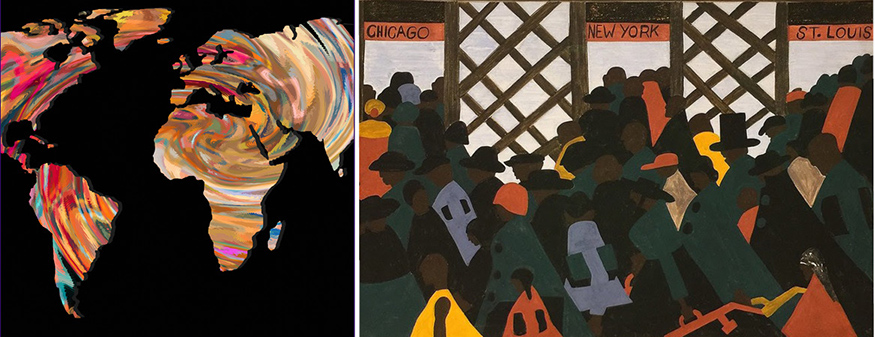
Learn about Black people’s struggle for freedom in the American context through their most influential social, legal, and cultural movements. Students will explore politics through music and art, including film screenings, optional on-campus gallery visits, and curated playlists.
Kierstan Kaushal-Carter, Political Science
5 credits, SSc / DIV
Humanities in Action: Ideas That Harm and Heal the World
CHID 100
How can literary, philosophical, artistic, and historical ways of thinking help us respond to urgent issues like war, climate change, genocide, and structural violence, both locally and globally? How can we save the world? Explore humanistic genres and modes of thinking and their potential to heal the world.
Annie Dwyer, Comparative History of Ideas
5 credits, A&H / DIV
Sex & Gender
History of Sex
HSTCMP 284 / GWSS 284
Beginning in Medieval Europe and going through the sexual revolution of the 1970s, the course traces how people thought about and experienced love, romance, and women's and men's roles in society, as well as related regulations of birth control, abortion, gay relationships, transgender people, enslaved people, and other facets of race, class, and gender.
Laurie Marhoefer, History
5 credits, SSc / DIV
Sex, Commerce, and the Making of Modern Paris
FRENCH 223 A / GLITS 253 E
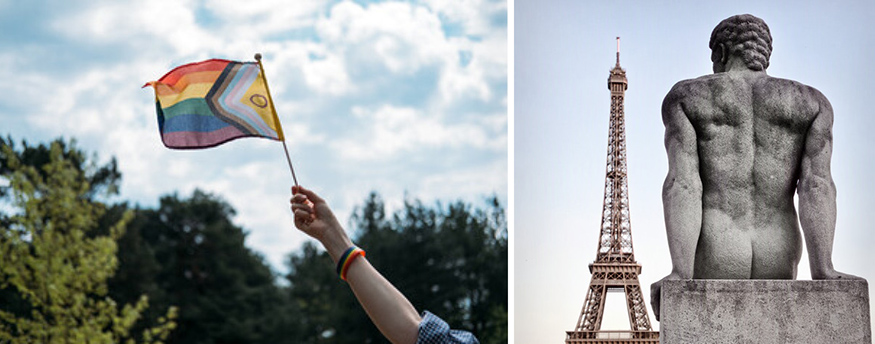
Explore how Paris became the city of love! This class examines how sexual commerce shaped the identity of Paris, how its commercial spaces shaped sexual identities, and how discourses about sexuality contributed to the legitimation of capitalism. The course will also consider the construction of gender difference, the emergence of mass media, and the commercial origins of queer identities with a very French twist.
Matthew Skrzypczyk, French & Italian Studies
5 credits, SSc / DIV
LGBTQ Identities
SOC 301
Explore the ways lesbian, gay, bisexual, transgender, and queer (LGBTQ) identities are socially constructed by institutions like the law, family, science, religion, and culture, and how LGBTQ communities resist, reshape, and capitulate to these constructions. The class will examine both contemporary LGBTQ experiences and their origins, while also considering how other identities like race, class, and gender shape LGBTQ identities and communities in complex ways.
Rosalind Kichler, Sociology
5 credits, SSc
Sex, Death, and Evolution
BIOL 103
Evolution is the conceptual foundation of the life sciences, and evolutionary biology's fundamental principles are simple enough that you can write them on an index card, and yet the field offers insights into real-world matters of life and death. With examples involving sex and death, this course provides a citizen's overview of theoretical and empirical evolutionary biology.
Jon Herron, Biology
2 credits, NSc

Exploring Creativity
Beginning Playwriting
DRAMA 441
Learn the core fundamentals of playwriting in this workshop-style course. Through targeted writing exercises, peer critiques, and the analysis of professional plays, students will develop original scripts while cultivating their unique creative voices. Instead of quizzes and exams, each student will complete a comprehensive script treatment mapping out an entire story arc alongside a fully developed, polished scene ready for the stage.
Nikki Yeboah, Drama
5 credits, A&H
Neuroscience & Art
DXARTS 490A
(listed as "Special Topics in Digital Arts & Experimental Media")
Explore the intersection between art, imagination, hallucination, and neuroscience. Students will learn about EEG, EMG, and other DXARTS Brain Lab devices and create experimental projects based on various brain functions that will be examined. The course is co-taught with leading neuroscientists and academic researchers in brain-computer interfaces and neural networks, and composers of computer music using real-time brain and nervous system data to shape and control musical sound.
Richard Karpen, Digital Arts & Experimental Media
5 credits; to fulfill A&H, email dxarts@uw.edu
Writers on Writing
ENG 285
Have you ever wondered how the intricate plots and subplots of your favorite novel were woven together? How your favorite writer constructed the most beautiful sentence you’ve ever read? This class will introduce you to the creative processes of working writers and provide opportunities to interact with writers, asking about their poems or stories and their writing process. Short writing assignments include writing poems, short stories, and/or personal essays; writing book reviews; writing academically; keeping a writer’s notebook; and critiquing the work of peers.
David Nikki Crouse, English
5 credits, A&H
Crossing the Line: Film/Television/Streaming Careers, Above and Below the Line
CMS 274
This class introduces seven critical roles on every movie production: producer, screenwriter, director, cinematographer, actor, editor, and composer, in weekly one-on-one conversations with some of the best in the business — Oscar® and Independent Spirit® award winners and nominees, along with critically acclaimed up-and-comers — as they reveal their paths to success and, more importantly, the keys to making great work.
Warren Etheredge, Cinema & Media Studies
5 credits, A&H
Backstage Pass: Technical Marvels in Popular Culture
DRAMA 111
Ever wondered what’s happening behind the scenes at large-scale events like concerts, award shows, sports events, and half-time shows? Learn how the entertainment industry conceives, plans, and executes state-of-the-art technical challenges and solutions in making these large-scale events come to life. Students will get a behind-the-scenes look at some of the largest-scale performance events.
Chris Reay, Drama
5 credits, A&H
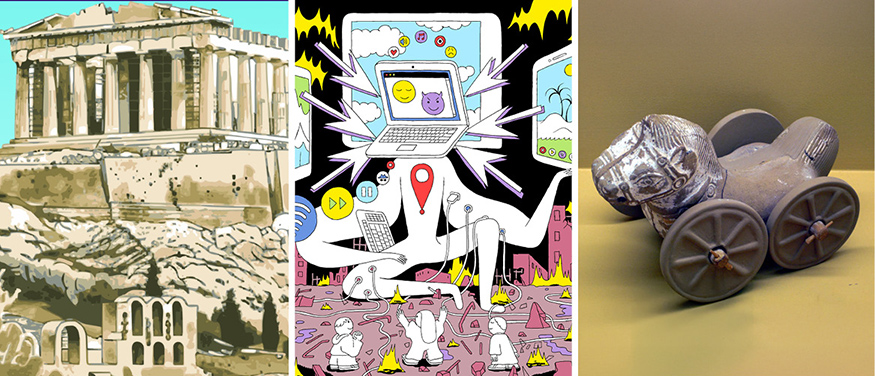
Past & Present
History of the Digital Age
HSTAA 317 A
Learn about the evolution of the American computer hardware and software industries from the 1940s to the present day. You’ll place today's debates about digital technologies and platforms into a longer political, social, and economic perspective, and explore how the power around digital technologies has stayed the same or changed.
Margaret O'Mara, History
5 credits, SSc
Greece: From Ancient to Modern
JSIS A 239 / CLAS 239
From ancient democracy and Olympic glory to modern Greece, learn how Greek history, mythology, art, and culture continue to shape a nation and connect the ancient world to today. This course goes beyond ancient history to explore how Greece’s remarkable cultural and political legacy continues to shape the country today.
Nektaria Klapaki, International Studies/Hellenic Studies
Alexander Hollmann, Classics
5 credits, A&H / SSc
Making Manuscripts: Manuscript and Handwriting Technologies from Antiquity to Today
TXTDS 220
Learn about Western and non-Western manuscript production and engage with rare manuscript fragments and books up close, some dating back to the 12th century. Topics to be covered include visual and literary cultures, handwriting history and techniques, multilingualism, and the social history of the book.
Beatrice Arduini, French and Italian Studies
5 credits, A&H / SSc
The Past in Play
ARCHY 269
Explore how people played in the past and use play as a framework to learn, understand, and explore the principles of archaeology. Through role-playing and video games, you will learn about archaeology and how archaeologists use analog and video games to teach and learn about the past.
Paulina F. Przystupa, Anthropology
5 credits, SSc
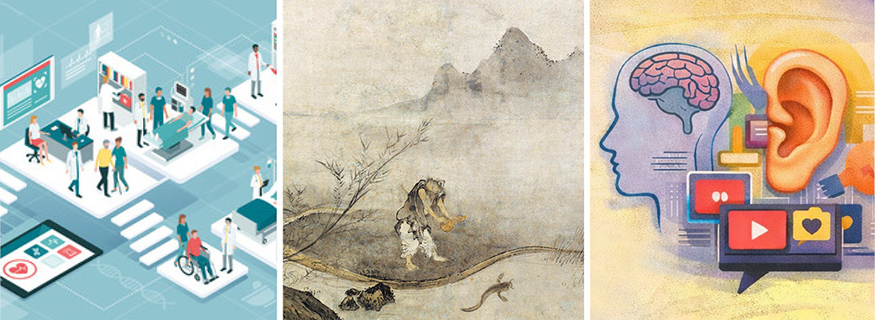
Health & Wellness
US Health Disparities
SOC 230
Learn about the health status and healthcare disparities among racial/ethnic minority groups in the United States. Using sociological, demographic, (social) epidemiological, and (social) psychological concepts to analyze current racial/ethnic health disparities research, students will learn how to critically examine the US healthcare landscape.
Patricia Louie, Sociology
5 credits, SSc / DIV
The Fattest Ape: The Evolution & Epidemiology of Human Adiposity
BIO A 320
Why are humans the fattest primates, and why do women store fat differently than men? Learn how evolution, history, and culture shape our bodies, health, and ideas about fat, and how those ideas about fatness have changed across history and cultures. We’ll also separate science from hype on weight gain and weight loss interventions and consider how to apply this knowledge to challenge fat stigma.
Melanie Martin, Anthropology
5 credits, NSc
Communication Disorders in a Social World: Barriers and Bridges
See communication in a new way by connecting everyday experiences to bigger social questions. You’ll learn the basics of how speech, hearing, and language work while also examining how society, media, and expectations shape what we consider “normal” communication. With an emphasis on advocacy, inclusive practices, and respect for communicative diversity, this course uses real world examples, discussion, and hands-on activities to explore how communication barriers arise and how they can be reduced, as well as the roles of communication professionals.
KC Lee, Speech and Hearing Sciences
3 credits, SSc
Meditation, Mindfulness, and Zen
What is the difference between meditation, mindfulness, and Zen? These practices are everywhere today in the contexts of wellness, health, and spirituality, but their roots lie in more than two millennia of Buddhist history. Explore Buddhist meditation through stories, texts, art, Zen riddles, pop culture, and technologies that have transformed into the “mindfulness” we know today. Students will explore what meditation reveals about how humans across cultures have understood the mind, suffering, happiness, and what it means to live well.
Jonathan Laiman, Asian Languages & Literature
5 credits, A&H / SSc
Geography of Health and Healthcare
Explore concepts of health from a geographical viewpoint, including human-environment relations, development, geographical patterns of disease, and health systems in developed and developing countries.
tish lopez, Geography
5 credits, SSc
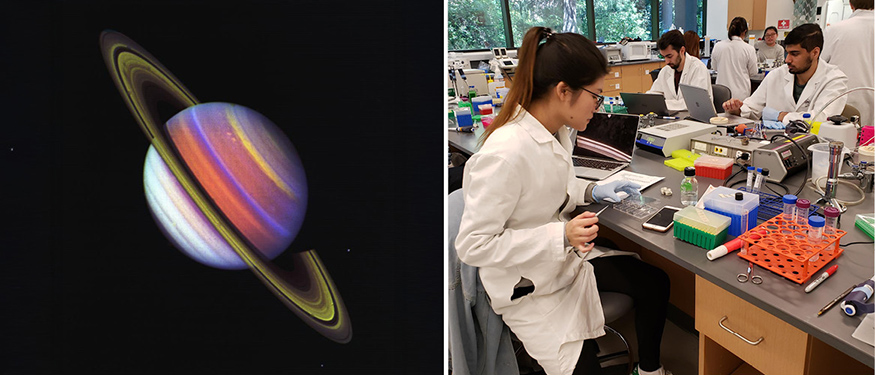
First Steps in STEM
How Scientists Think: Introductory Biology Seminar
BIOL 106
How do scientists ask questions about the natural world? How do they design experiments, interpret data, and share discoveries? How do students begin to think and learn like scientists themselves? In this course, you’ll explore how to approach biology as a scientist while building skills for success in the introductory biology series. You’ll connect with peers and mentors, discover research and training opportunities, and plan your own academic and professional path in the life sciences.
Briana Gilbert, Biology
3 credits, NSc
The Planets
ASTR 150
Explore planets, exoplanets, weather, geology, biology, fractals, and the latest discoveries in space science through interactive lectures, debates, hands-on labs, and creative projects. This course makes complex ideas approachable while inspiring curiosity about our place in the universe. The course is designed around collaboration, discussion, and exploration, with a focus on curiosity rather than high-stakes testing. Leave with a deeper understanding of science, a greater appreciation for our planet, and a renewed sense of wonder about the universe.
Sophia Natalia Cisneros, Astronomy
5 credits, NSc / RSN
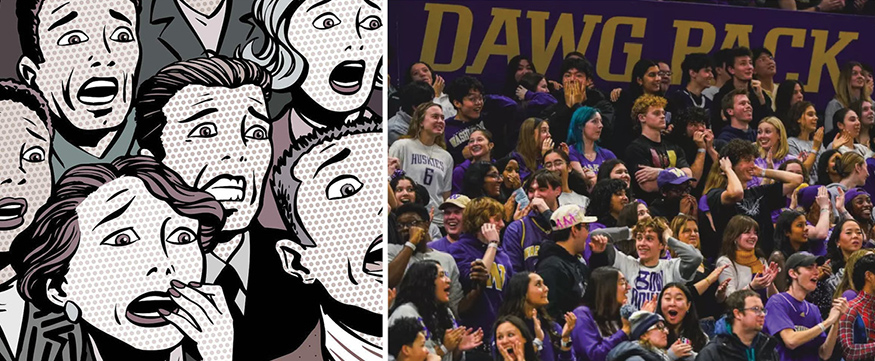
More Cool Courses
Economics of Sports
ECON 216
Analyze sports, athletes, sports fans, sports competitions, sports business, and sports policy as a way of learning about economics. Learn about microeconomic concepts including markets, trade, opportunity cost, and resource allocation to understand contemporary issues in the sports world. Students' own experiences with sports, as fans and/or student-athletes, become fodder for fascinating discussions that unveil deeper patterns across all areas of life and can open up new appreciation for, and critique of, the role sports play in society.
Yael Midnight, Economics
5 credits, SSc
Holy People and Holy Places of the Horn of Africa
MELC 415
Journey through the religious and cultural history of the Horn of Africa, exploring the lives and stories of Ethiopian Christian saints, Somali Sufi mystics, Jewish Ethiopian heroes, and the holy places associated with them. You'll encounter sacred biographies, miracle traditions, pilgrimage sites, sacred shrines, and centuries-old debates about who becomes a hero and why. Along the way, you'll discover a region where Jewish, Christian, Muslim, and Indigenous traditions have interacted for generations.
Mehari Worku, Middle Eastern Languages & Cultures
3 credits, A&H / SSc
US Pacific Islander Contemporary Culture
AAS 300 / ANTH 307 / AIS 375A
Learn about US Pacific Islander culture, with a focus on contemporary experiences of Pacific Islanders in the United States and other diaspora communities. Major themes of the course include post-colonialism, migration, family, religion, politics, gender, education, and transnational identify. Visiting lecturer Noelani Montas is a Native Hawai'ian instructor and performer in traditional Hawaiian theatre.
Noelani Montas, American Ethnic Studies
5 credits, SSc / DIV
Swearing and Taboo Language
LING 269
If swear words are ‘bad’, why do we use them? Everyone uses taboo language, but few people stop to ask why. The course examines swear words and taboo language, both within and across cultures, investigating their linguistic, pragmatic, neurological, psychological, social, and legal aspects. You’ll find that some of the most interesting answers to our questions about language start with the words we're told not to say, and you may never look at a swear word the same way again.
Linguistics faculty, TBD
5 credits, SSc