Close up of a tree with leaves turned yellow

Cool Courses for Autumn Quarter 2026

Back to All Stories
04/06/2026
Your ArtSci brand image. Your ArtSci written in scribbled text, on a purple background surrounded by various arts and sciences related icons

As you think about autumn quarter 2026 course registration, check out these unique Arts & Sciences offerings. These courses are open to all students, have no prerequisites, and fulfill Areas of Inquiry requirements as noted.

Abbreviations for Areas of Inquiry: A&H (Arts & Humanities), SSc (Social Sciences), NSc (Natural Sciences), DIV (Diversity), Reasoning (RSN), W (Writing Option).

Living with Technology
Identity & Society
Read the Classics
Asia Through the Arts
A Global Perspective
Europe Past & Present
More Cool Courses

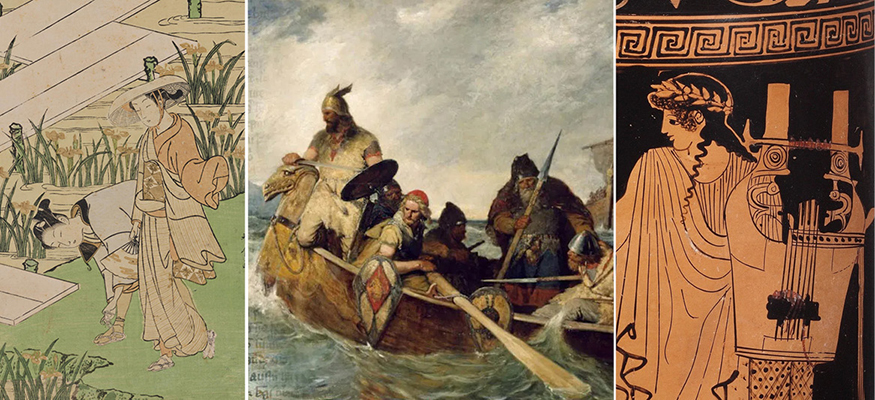
Montage of images related to Cool Courses

Living with Technology

AI & Human Creativity in Historical Perspective     

TXTDS 221
Can chatbots be creative? Should AI output be protected by copyright? Or is AI output an infringement of copyright by definition, since models simply regenerate in-copyright text without permission? How might an 18th-century copyright law help us steer AI in ways that support rather than undermine human activity in the 21st century? We’ll seek to better understand AI and its impacts by exploring how information technologies have impacted societies, cultures and individuals across history, including how these technologies shaped and reshaped what it means to be human.
Geoffrey Turnovsky, French & Italian Studies
5 credits, A&H / SSc


Being Human with Technology

CMS 297A
(listed as "Special Topics in Cinema & Media Studies")
What does it mean to be human when the most distinctively human of activities — thinking, working, learning, and caring for others — are mediated by tools and machines? How does technology enrich human experience, and how does it threaten to dehumanize its users? Can we as individuals cultivate a mindful, intentional approach to the technologies we use on a daily basis?  This course is experiential, hands on, and imaginative, with field trips included.
Mal Ahern, Cinema and Media Studies
5 credits, A&H

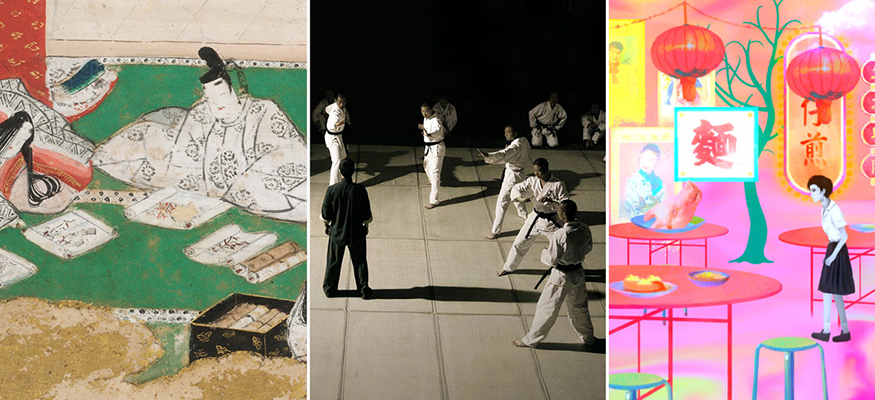
Montage of images related to Cool Courses

Identity & Society

Gender and the Law 

GWSS 310
From reproductive rights to trans athletes’ participation in sports, issues of gender, sex, and sexuality are playing out in courts across the United States, with profound consequences for people impacted by them. Examine the historical and current legal structures affecting sex, gender, and sexuality, with a focus on the constitutions and statutes of the United States. Topics include equality, discrimination, harassment, violence, marriage, divorce, parenting, and human and reproductive rights.
Instructor TBA
5 credits, SSc / DIV


Social Problems

SOC 270
Several social ills plague our society today, including youth crime, violence and abuse, homelessness and poverty, racial and gender inequality, and the health pandemic. Yet at various times and places, certain issues are labeled by different people as serious social problems or as individual problems. Explore how some social problems in the US have come to be identified as important problems.
Alexes Harris, Sociology
5 credits, SSc


Identities: Race, Class, Gender, and Sexuality in Anthropology

ANTH 228
Learn about the study of race, class, gender, and sexuality through an anthropological lens. Through ethnographic and theoretical readings, you will be introduced to the concept of identity as intersectional construction and social performance.
Celia Lowe, Anthropology
5 credits, SSc

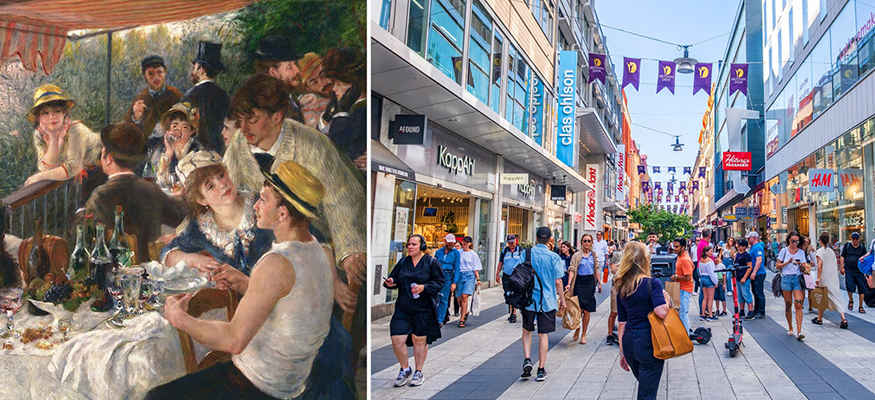
Montage of images related to Cool Courses

Read the Classics

Sagas of the Vikings

SCAND 270 A / GLITS 252 A
Bloody feuds, dry humor, brutal revenge, unforgettable characters, real psychology — the Old Norse-Icelandic sagas stick with you and reshape how you see the medieval past and its present relevance.  Throughout the quarter, we will place the sagas in their cultural, historical, religious, and literary contexts while discussing a range of themes including landscape and the environment, mythology and religion, magic and the supernatural, prophecy and destiny, honor and vengeance, gender, identity, social power, and more.
Timothy Bourns, Scandinavian Studies
5 credits, A&H


Classical Japanese Literature in Translation

GLITS 311 A / JAPAN 321 A
This introduction to the literature and culture of Japan covers some of the greatest hits of classical Japanese literature from the earliest times until the mid-nineteenth century. The course includes close readings (in English) of tales, poems, plays, or essays, with an emphasis on understanding cultural and historical contexts.
Paul Atkins, Asian Languages & Literature 
5 credits, A&H


Greek and Roman Classics in English

CLAS 210 / GLITS 311 D
Explore major literary works from the ancient Greek and Roman world including comedies, tragedies, love poetry, epic stories of heroes, and philosophical writings. In this discussion-based course, students will analyze how these works explore the complex challenges of family and civic life, war, love, and what it means to live a good life.
Catherine Connors, Classics
5 credits, A&H

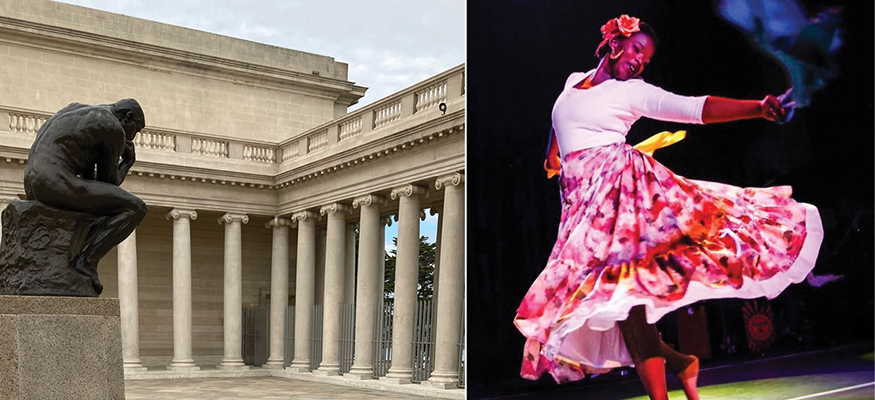
Montage of images related to Cool Courses

Asia Through the Arts

Arts of Japan

ART H 210
Learn about the arts of Japan from the pre-historic era to the present, from ancient tradition to cutting-edge innovation, with a particular focus on Buddhist art, sculpture and architecture, narrative handscrolls, ink painting, decorative screens, and woodblock prints. Throughout the course, we will take close account of the broader cultural and historical contexts in which the arts were made, with considerations including the role of ritual in Japan's visual arts, artistic responses to multiple visual pasts and rupture from these pasts, and the formats and materials of Japanese art.
Miriam Chusid, Art History
5 credits, A&H, W


East Asian Martial Arts Films

ASIAN 207 / CMS 272
(listed by various titles)
How did martial arts film emerge and grow into a global phenomenon? How does the study of genre help us to understand movies? Learn about film technique, pop culture history, the processes of intercultural translation, and Asian cultural traditions through the medium of martial arts cinema. More than just jaw-dropping choreography,  these films of East Asia help us learn about discipline, history, and the human condition, with timeless stories.
Chris Hamm, Asian Languages and Literature
Yomi Braester, Cinema and Media Studies

5 credits, A&H / SSc (Areas of Inquiry vary by department)


Made in Taiwan: Arts and Culture of Contemporary Taiwan

JSIS A 414 / CMS 320 C [Not yet in time schedule]
Explore Taiwan through film, music, and visual culture. This course unpacks identity, history, and politics through curated audio-visual works, guest talks, and collaborative projects.  Students will have opportunities to engage with artists and cultural practitioners while working on collaborative, creative projects, connecting ideas from the classroom to real-world cultural production.
Ellen Chang, International Studies, Taiwan Studies Program
5 credits, SSc / W


Short Fiction and Film in Postcolonial South Asia

GLITS 313 A / S ASIA 498 C 
(listed by various titles)
Through translations of important fiction and films from postcolonial India and Pakistan — works rarely studied in the US — this course will focus on the 1947 Partition of British India into the modern nations of India and Pakistan and the aftermath of that partition, with topics including gender and sexuality, and memory and absence.
Jennifer Dubrow, Asian Languages and Literature 
5 credits, A&H

Montage of images related to Cool Courses

A Global Perspective

The Making of the Modern World

JSIS 200
To understand the contemporary world, it helps to look into the past. This course examines how the modern world came to be structured around nation-states, when most economies became capitalist, and why most societies are organized around structures of inequality. This global history of the present will investigate the relationships between political forces, economic processes, and socio-cultural dynamics of expansion, domination, and resistance.
Sunila Kale, International Studies
5 credits, SSc              


How to Steal an Election

POL S 220
Although democracy has spread globally since the end of the Cold War, political actors increasingly seek to win elections through nefarious means. Why are elections worth stealing, who (tries to) steal them, and in what ways? This course surveys diverse rigging strategies that undermine elections in modern democracies, globally and in the US, and presents new methods that can improve electoral integrity.
James Long, Political Science
5 credits, SSc              


Immigration

JSIS B 324
Learn about key theoretical debates in international migration, and examine immigrants' political, economic, religious, and social integration into host societies — and their continued ties to homelands. Designed around interdisciplinary texts and fieldwork in Seattle, the course will explore experiences of voluntary and involuntary immigrants, of the second generation, and of incorporation into America and Europe.
Randa Tawil, International Studies
5 credits, SSc / DIV


Geography of the World Economy: Regional Fortunes and the Rise of Global Markets

GEOG 208
Examine the relationship between the globalization of economic activity and regional development. Topics to be explored include international trade, colonialism, industrial capitalism, advanced capitalism, and the globalization of labor markets.
Mark Ellis, Geography
5 credits, SSc 

Montage of images related to Cool Courses

Europe Past & Present

Scandinavia Today

SCAND 200
Often held up in the United States as a model for a "happier" life, modern Scandinavian society has developed a finely tuned balance between capitalism and socialism. This course will examine innovative policies from this region regarding gender equality, LGBTI rights, and human rights standards that impact the world. The professor, a former diplomat who served in Europe and the Middle East, has lived in Sweden and researched Swedish foreign policy and LGBTI rights.
Elise Rainer, Scandinavian Studies
5 credits, A&H / SSc


Politics and Cultures of Marketplace Displays in France

FRENCH 220 A 
From the French Revolution through the 20th century, food and fashion became fertile terrain for constructing and critiquing a sense of French national identity. This course will explore French culinary and sartorial spaces, with topics including the World Fairs and the first department store, Le Bon Marché, while drawing transnational comparisons through field trips to Seattle landmarks including the Pike Place Market and the historic Bon-Macy's.
Irina Markina, French & Italian Studies
5 credits, A&H / SSc


Seeing the 20th Century: European History and Film from the 1890s to the Present

HSTEU 274
The twentieth century has been called an “age of extremes.”  This course will survey this turbulent age, covering two world wars, the rise and fall of fascism and communism, postwar migrations, the Cold War, and the collapse of empires — with a focus on the social and political function of film in the specific context of 20th-century Europe. Through explorations of key moments in the recent European past, we will consider broader questions of citizenship and identity in modern political life.
Jordanna Bailkin, History
5 credits, A&H / SSc / W


Literature and the Holocaust

MELC 318 / GLITS 314 A
By examining fiction, poetry, memoirs, diaries, monuments, comics, and other aspects of popular culture, this course will explore literary responses to the Nazi Holocaust. Topics to be covered include: bearing witness and survivor testimony; the shaping of collective memory; surviving generations; Holocaust education and children's literature; gender and the Holocaust; and fantasy and humor in representations of catastrophe.
Naomi Sokoloff, Middle Eastern Languages and Cultures; Jewish Studies
5 credits, A&H

Montage of images related to Cool Courses

More Cool Courses

The Idea of the University

CHID 210
Is the university an agent of colonialism, capitalism, and the state? Is it a crucible for social change and resistance? Is it all of these things? Can it be something else? This course examines the university as simultaneously a crime scene, a site for healing, and a place for transformation. Students will engage with the work of scholars across the arts and humanities, with special attention to the contributions of Black, Indigenous, and other critical intellectual traditions.
Tony Lucero, Comparative History of Ideas
5 credits, SSc              


Principles of Biological Anthropology

BIO A 201
Learn about evolution and adaptation of the human species through an anthropological lens. In this course you will look at evidence from the fossil record and living populations of monkeys, apes, and humans; explore interrelationships between human physical and cultural variation and environment; and consider the role of natural selection in shaping our evolutionary past, present, and future.
Andrea Duncan, Anthropology
5 credits, NSc


Contesting Extinction: Imagining Multispecies Futures

GERMAN 285 A / GLITS 251 B / CHID 234 B / ENGL 365 [Not seeing ENGL 365 in time schedule]
(listed by various titles)
Explore how current threats to biodiversity are inseparable from threats to cultural diversity. Students will consider and critique various framings of "The End" in literature, art, music and film, ultimately resisting the apocalyptic appeal of art that depicts terminal extinction scenarios. Assignments are oriented toward imagining and generating collective, livable futures in the wake of biodiversity loss, and culminate in one important question: How do we know this is a bad thing?
Jason Groves, German Studies
5 credits, A&H / SSC / DIV (Areas of Inquiry vary by department)


Dance, Culture and Colonization

DANCE 356
Colonization has often involved repression of Indigenous dance and other cultural and spiritual expressions. How has a colonial history shaped culture and dance? Through readings, discussions, videos, practice, and guest artist presentations, explore the effects of colonization and migration on the practice, evolution, and representation of dance cultures in select regions of the world, with particular focus on how specific dance practices intersect with systems of racial, ethnic, and national identity.  Students will have the unique opportunity to learn both movement and history directly from dance practitioners representing diverse regions across Latin America.
Monica Rojas-Stewart, Dance
5 credits, A&H / SSc / DIV


Principles and Practices of Technical & Professional Communication

ENGL 388
Technical writers have shaped how the public understands government regulations, encode gender and racial hierarchies, and how a pie chart can dehumanize victims of workplace accidents. In this course, you'll trace how the discipline of technical writing invented itself — and who got erased in the process. Wrestling with real documents, you will understand how every document, interface, manual, and data visualization is an argument.
Josephine Walwema and Calvin Pollak, English
5 credits, A&H / W

More Stories

Maddy Brown in a t-shirt and baseball cap stands on a basketball court.

A Math Course Inspired by TikTok & Basketball

After creating popular social media content analyzing basketball statistics, UW Mathematics doctoral student Maddy Brown created a course to help students present data through storytelling. 

Illustration of a student at a desk, with a computer monitor replacing his head.

AI in the Classroom? For Faculty, It's Complicated

Three College of Arts & Sciences professors discuss the impact of AI on their teaching and on student learning. The consensus? It’s complicated.

a group of studn

What Students Really Think about AI

Arts & Sciences weigh in on their own use of AI and what they see as the benefits and drawbacks of AI use in undergraduate education more broadly. 

Explore Stories Across Arts & Sciences Departments