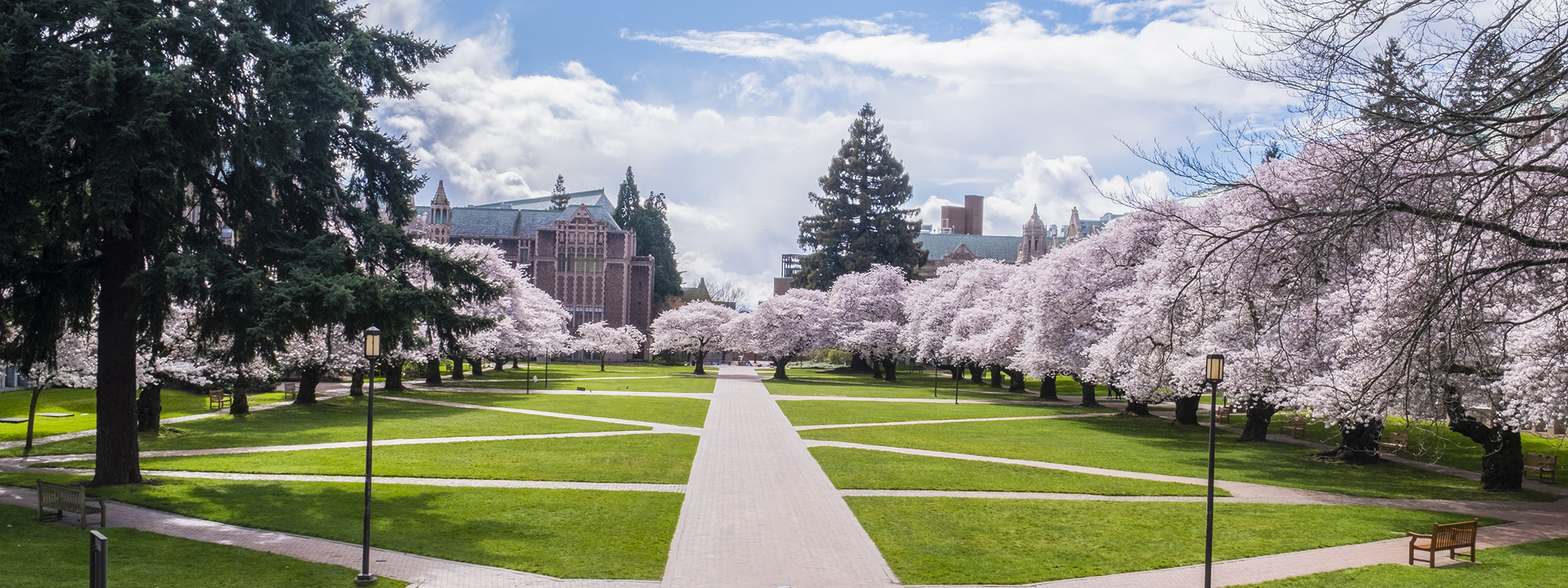
UW quad with cherry trees blooming

Cool Courses for Spring Quarter 2026

Back to All Stories
02/06/2026
Your ArtSci brand image. Your ArtSci written in scribbled text, on a purple background surrounded by various arts and sciences related icons

As you think about spring quarter 2026 course registration, check out these unique Arts & Sciences offerings. These courses are open to all students, have no prerequisites, and fulfill Areas of Inquiry requirements as noted.

Abbreviations for Areas of Inquiry: A&H (Arts & Humanities), SSc (Social Sciences), NSc (Natural Sciences), DIV (Diversity), Reasoning (RSN), W (Writing Option).

Conflict & Consequences
Stage &  Screen
Our Bodies, Our World
Writers and Their Impact
Identity & Culture
About Language

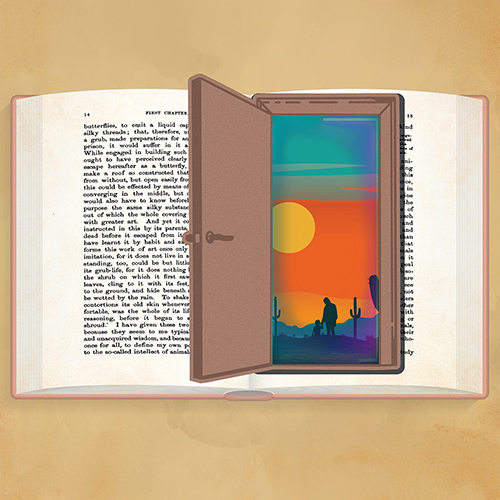
Montage of images related to Cool Courses

Conflict & Consequences

Revolution!

(listed by various course titles)
GLITS 251 A / CHID 250 B / ENGL 385 A / GERMAN 385 A
How and why do revolutions succeed and fail? Explore how revolutions play out in history, film, music, and literature. We'll watch Marjane Satrapi's “Persepolis,” listen to Lin Manuel's “Hamilton,” read Hannah Arendt's “On Revolution,” and look at Hong Kong protest art. Students will work in groups on projects about a revolution of their choice.
Ellwood Wiggins, German Studies
5 credits, A&H / SSc / DIV (Areas of Inquiry vary by department)


Sociology of Policing

(listed as “Special Topics in Sociology”)
SOC 201 B
Policing sits at the center of America’s fights over public safety and civil liberties. This course will use empirical and historical research to examine how policing is governed, and how those structures shape street-level practice, including stops, use of force, and crisis response. In small groups, students will trace how oversight and reforms change policing — and where they fall short — in Seattle and beyond. 
Theresa Rocha Beardall, Sociology
5 credits, SSc


Terrorism, Radicalization & Extremism

(listed as “Topics in International Relations”)
POL S 333A
Why do people radicalize and engage in terrorism? This course examines pathways into extremist violence, cases across ideologies, and how societies attempt to prevent and counter terrorism. By analyzing real-world cases of terrorism and radicalization, we will move beyond catchy headlines to explain why violence emerges, why some people participate and others don’t, and which counterterrorism and prevention efforts work.
Jessica Sciarone, Political Science 
5 credits, SSc           


Italian Fascism

ITAL 475
What are fascism, populism, and authoritarianism? How are these categories relevant today? Through text and art, we will explore the development of fascism in Italy and the growth of historical fascists like Mussolini, while also delving into modern Italy to see how fascism has continued.
Susan Gaylard, French & Italian Studies
5 credits, A&H / SSc


United States During the Era of Civil War and Reconstruction

HSTAA 241 A/ AFRAM 241 A
Examine the history of the American Civil War and Reconstruction through the lens of African American social history. Beginning with the abolition of the Atlantic slave trade and concluding with the expansion of Jim Crow laws and policies, this course considers how ideas about race, gender, class, and freedom in the U.S. were repeatedly challenged, reimagined, and reshaped — and which historical legacies still exist today.
Bianca Dang, History
5 credits, SSc / DIV


Drug Wars in Latin America

HSTLAC 280 A
How does the past history of drug wars in Latin America relate to current drug wars? Analyze the "war on drugs" in Latin America as a political, economic, and socio-cultural construct, with local, regional and global dynamics rendering some mood-altering substances as legal while subjecting others to prohibitionist policies at different historical times — and how racial, class and gender logics shape these processes.
Ileana Rodriguez-Silva, History
5 credits, SSc / DIV / W optional

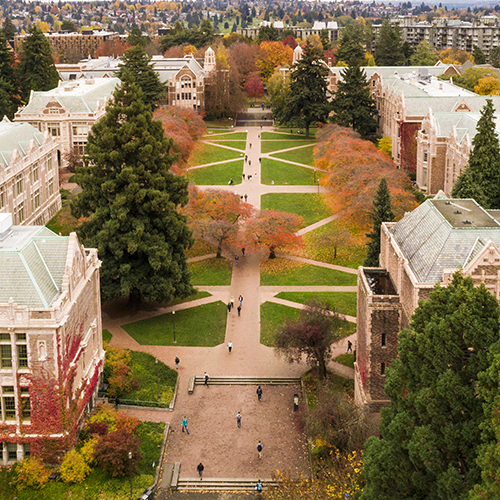
Montage of images related to Cool Courses

Stage & Screen

Vampires, Vamps, and Villains - German Film of the 1920s

(listed by various course titles)
GERMAN 371 A / CMS 320 B
Through an analysis of significant films produced in Weimar Germany from pre-WWI to the rise of Hitler, we will explore the stylistic, generic, and thematic trends of this turbulent period in German history, including issues of sexuality, the evolution of gender roles and their depictions, the rise of the metropolis, the influence of mass media, criminality, technology, and the apocalyptic effects of modern warfare.
Andre Schütze, German Studies
5 credits, A&H


The Cinema of Barcelona, Inside and Out

(listed by various course titles)
SPAN 335 A / CMS 320 A
Explore Barcelona through film! This course will examine cinematic representations of Barcelona to determine the ways in which film has contributed to making this city a consumable good, a site of awe, revolution, crisis, and even a touristic product. 
Leigh Mercer, Spanish & Portuguese Studies
5 credits, SSC, A&H              


Contemporary Drama by Playwrights of Color

(listed as “Diverse Voices in Performance”)
DRAMA 365 A
Examine how theatre and performance celebrate, grapple with, and bear witness to the experiences and representation on stage of historically underrepresented or marginalized communities. This course is an opportunity to explore the bold, exciting, engaged work being taken up by current artists of color in the US and beyond.
Jasmine Mahmoud, Drama 
5 credits, A&H / DIV 


Science Fiction

(listed as “Perspectives on Film: Genre”)
CMS 272
This survey of sci-fi cinema spans more than a century, from Trip to the Moon (1902) and War of the Worlds (1953) through Interstellar (2014) and Prey (2022), with a focus on cultural context and on camera techniques, editing, set design, sound, and special effects. As prolific and celebrated sci-fi author Samuel Delany says, “Science fiction is a tool that helps you think.” Plus, lots of nifty robots.
Jennifer Bean, Cinema and Media Studies
5 credits, A&H

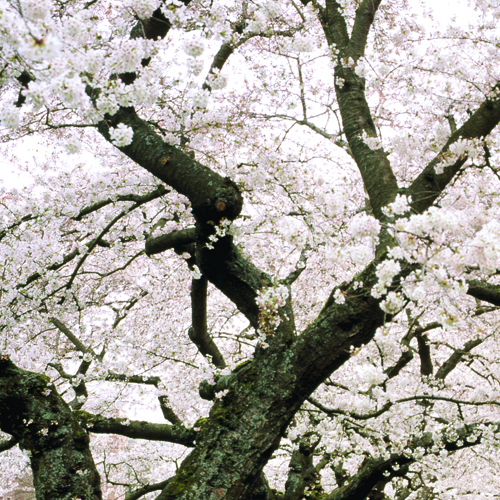
Montage of images related to Cool Courses

Our Bodies, Our World

Survey of Physiology

BIOL 118
How do you digest food? How do your muscles work? How does your body’s functioning change when you feel stress? The field of human physiology explores how the systems of the human body function in healthy bodies and in bodies that are facing disruptions in homeostasis. In this course for non-majors and health sciences students, you will learn by working through case studies, solving problems, and making predictions about physiological and societal effects of health issues.
Briana Gilbert, Biology
5 credits, NSc


Body Politics

GWSS 258
How is something so intimately experienced as the body shaped by social norms? Using a diverse set of textual and visual sources, students will examine the ways bodies are made through medicine, media, ecology, and violence, and will reflect on the bodies they inhabit. Through critical thinking about the social norms and practices that produce injury and injustice, they will imagine alternative models of social organization, health, and environmental stewardship.
Instructor TBD
5 credits, A&H / SSc / DIV


Social Construction

(listed as “Special Topics in Sociology”)
SOC 201 C
We often treat our world — from gender categories to beauty standards to environmental habits — as "just the way things are." But what if these weren't natural facts but designs constructed through repeated social action? We will use the world around us — TikTok trends, corporate marketing, and current events — as our laboratory, to explore who has the power to define what is real and who benefits (and who is harmed) when those definitions stick.
Sasha Johfre, Sociology
5 credits, SSc


Introduction to Conservation Biology

BIOL 126
Asynchronous Online
Explore the incredible diversity of life on Earth and learn how scientific principles are used in the conservation of biodiversity. A central theme of this asynchronous online course is “hope.” While loss of biodiversity is a concerning societal issue, successful case studies in conservation — including sea turtles, peregrine falcons, Indian Rhinos, and others — illustrate reasons for hope and action in conservation biology.
Berry Brosi. Biology
5 credits, NSc

Montage of images related to Cool Courses

Writers and Their Impact

Gulliver’s Travels Among Muslims and Jews

(listed by various course titles)
MELC 340 A / MELC 596 B / GLITS 312 A
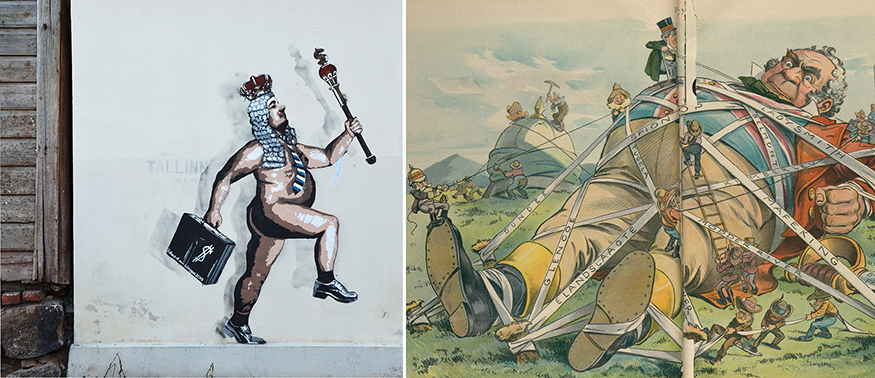
“Gulliver’s Travels” is one of the most bizarre texts to read and to teach. The 18th-century book mesmerizes readers with an enchanting narrative of faraway lands, but it also reveals the judgments and prejudices of its time, which have had lasting impacts. Through the lens of this book, learn about translations of European texts into non-European languages, particularly among Muslim and Jewish groups of the Eastern Mediterranean and the Middle East, as we trace its rewriting across different cultures, media, and discourses.
Canan Bolel, Middle Eastern Languages & Cultures
5 credits, A&H            


Hans Christian Andersen and the Fairy Tale Tradition

SCAND 232 A / GLITS 252 B 
Hans Christian Andersen's socially critical, romantic and witty fairy tales are still relevant to our world today. "The Emperor's New Clothes" (1837), a parable about a vain and ineffectual ruler surrounded by loyal courtiers, is based on ancient folk-tale variants and still resonates with modern audiences. Explore how fairy tales make sense of the world during difficult times and changing political climates.
Marianne Stecher-Hansen, Scandinavian Studies
5 credits, A&H


Nature and Nation: Romantic Poetry in India

SASIA 498 B / GLITS 313

Explore the global history of romanticism through poetry, literary essays, and political tracts by figures who are part of the global romantic canon as well as by Indian romantic poets who are not. Learn why 20th-century Indian poets writing in the midst of anti-colonial political struggles found romanticism appealing, and what we can understand of romanticism when we place these poets and writers alongside each other.
Sravanthi Kollu, Asian Languages & Literature
5 credits, A&H

Montage of images related to Cool Courses

Identity & Culture

Powwow Cultures in Native North America

AIS 321 / MUSIC 321
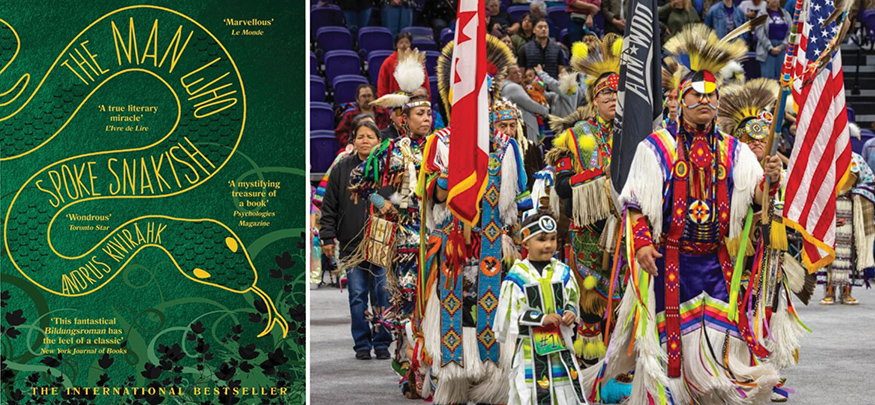
Learn about historic and contemporary powwow practices by engaging in a variety of participatory and hands-on activities, including interactions with powwow musicians, dancers, organizers, and community members — via guest lectures and participation in the annual UW First Nations Powwow — as well as analyses of print and audiovisual media, including social media.
Jessica Bissett-Perea, American Indian Studies
John-Carlos Perea, Music

5 credits, A&H / SSc / DIV


Making the In/Human: A Public Writing Seminar

(listed as “Seminar in Public Writing: Writing for Good”)  
CHID 320 A
What does it mean to be human? How are certain humans made into monsters? Explore how ideas of the “human” are made in relation to concepts of inhumanity, animality, and monstrosity, and how these concepts have operated within and against forms of social and political power. We will pair readings of critical theory with writing assignments including analysis of sci-fi and horror films, literature, and video-games; op-eds; writing on current events; and more.         
Kyle Trembley, Anthropology
5 credits, A&H / W     


Asian American and Pacific Islander Women

AAS 392 / GWSS 392
Explore the intersections of race, ethnicity, gender, class, and sexuality in the lives of Asian American and Pacific Islander women and examine how forces such as immigration, colonialism, sovereignty, labor, family, gender roles and relations, community, war, homeland politics, transnationalism, and social movements shaped and were shaped by these women.
Linh Nguyen, American Ethnic Studies
5 credits, SSc / Diversity


Latinx and Latin American Cartographies

(listed as “Special Topics in Geography”)
GEOG 295
How can maps become agents for environmental justice, human rights, and political action? Rethink how maps are made — and for whom they are created — as you explore alternative cartographic practices emerging from Latin America that respond to issues such as migration, displacement, extractivism, and climate change while foregrounding ethics, participation, and social impact. The course combines lectures with mapping hands-on workshops. (No prior cartography experience is required.) Students will learn how mapping practices from the Global South mobilize narrative, emotion, and collective knowledge to challenge colonial frameworks of data and space.
José Alavez, Geography
5 credits, SSc


The Art of Indigeneity in South Asia

(listed as “Topics in Asian Art”)
ART H 414 A / ART H 514 A
Explore what art and visual culture tell us about the history and ongoing formations of Indigeneity and their marginalization in modern and contemporary South Asia. As Indigenous art and visual culture have received increasing recognition in South Asia, the moment demands attending to the specific ways that colonial collecting practices, discourses of craft, modernist representations of Indigeneity, and the work of Tribal and Adivasi artists and cultural practitioners have informed the South Asian case.
Akshaya Tankha, Art History, School of Art + Art History + Design
5 credits, A&H / SSc


Baltic Cultures

SCAND 345 / JSIS A 345
Learn about the cultures and peoples of Estonia, Latvia, and Lithuania in a social and historical context through Baltic literature, music, art, and film, including "The Man Who Spoke Snakish," an Estonian fantasy novel about the last human who knew the powerful language of snakes. Packed with dark humor, the book is also about the identity of a small nation adapting and surviving in a globalizing world — a perfect introduction to the Estonian, Latvian and Lithuanian peoples of Northern Europe, ancient and modern. 
Guntis Šmidchens, Scandinavian Studies, International Studies
5 credits, A&H / SSc
Montage of images related to Cool Courses

About Language

Swearing and Taboo Language

LING 269
Swearing, taboo words... can such bad language ever be good? We investigate the linguistic, neurological, psychological, social, cross-cultural, and legal aspects of swearwords. Swearing is not just “bad language” — it provides us with unique insight into how language works that we would not get if we restricted our focus to polite vocabulary.
Laura McGarrity, Linguistics
5 credits, SSc


Human and Machine Translation

FRENCH 222 / TXTDS 222
Learn about a cross-cultural communicative process — translation — that has been disrupted over the last 70 years by Machine Translation (MT). Explore the growth and development of Machine/AI translation, and learn how it has changed how everyone approaches translation today. (This course is approved for the Data Science minor and French major/minor.)
Richard Watts, French & Italian Studies
5 credits, SSc              


History of the German Language

GERMAN 452 / LING 415
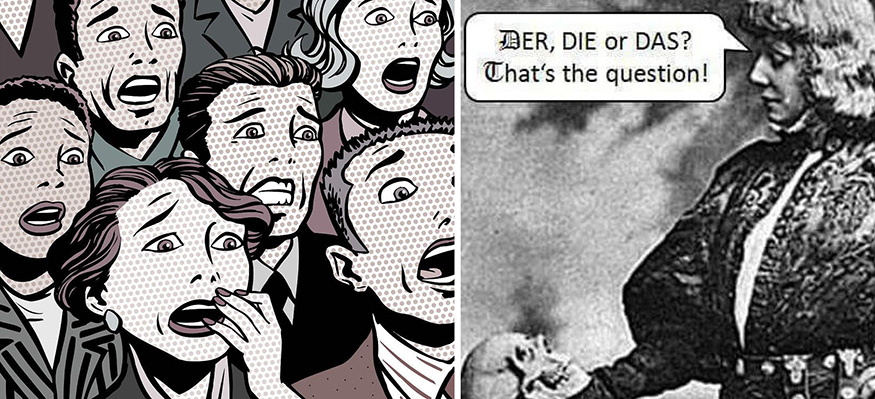
Explore the "biography" of the German language across time and space. Learn how history, power, translation, and immigration shaped modern German, from pre-Christian Germanic tribes to today. The course will explore (in English) German dialects, Luther’s Bible, language and power under Nazism, and why features like the umlaut exist. And there will be a week-long Live Action Role Play (LARP)!
Annegret Oehme, German Studies 
5 credits, A&H

More Stories

Illustration of a student at a desk, with a computer monitor replacing his head.

AI in the Classroom? For Faculty, It's Complicated

Three College of Arts & Sciences professors discuss the impact of AI on their teaching and on student learning. The consensus? It’s complicated.

a group of studn

What Students Really Think about AI

Arts & Sciences weigh in on their own use of AI and what they see as the benefits and drawbacks of AI use in undergraduate education more broadly. 

An bright orange sky behind trees during a wildfire in Eastern Washington

10 Arts & Sciences Stories from 2025

As 2025 comes to a close, we're sharing some of the year's top Arts & Sciences stories.

Explore Stories Across Arts & Sciences Departments