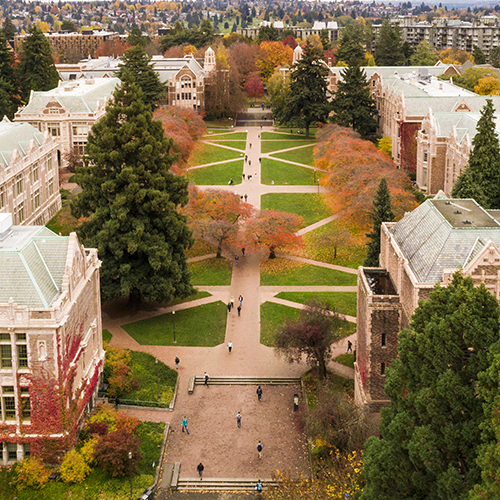
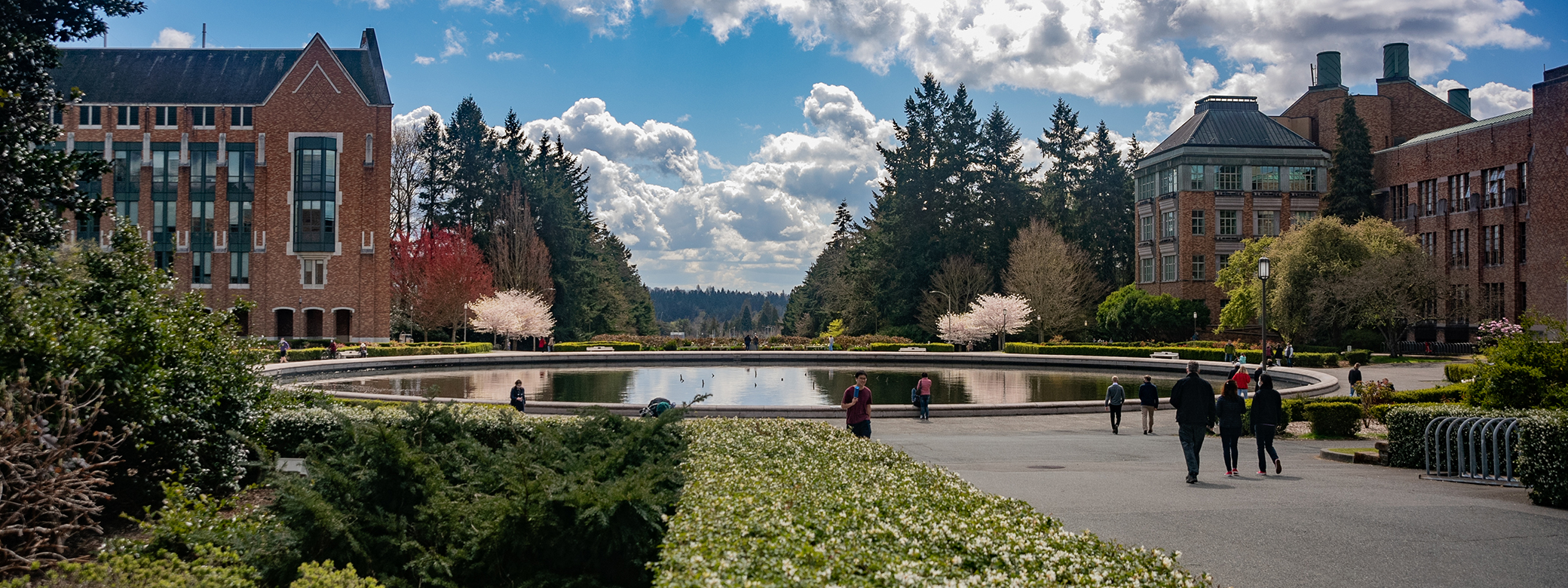
UW campus with Drumheller Fountain and buildings

Cool Courses for Summer Quarter 2026

Back to All Stories
04/13/2026
Your ArtSci brand image. Your ArtSci written in scribbled text, on a purple background surrounded by various arts and sciences related icons

As you think about summer quarter 2026 course registration, check out these unique Arts & Sciences offerings. These courses are open to all students, have no prerequisites, and fulfill Areas of Inquiry requirements as noted.

Each listing indicates whether the course will be in-person, online synchronous, or online asynchronous, and whether it will be offered A Term, B Term, or Full Term. Areas of Inquiry are noted with the following abbreviations: A&H (Arts & Humanities), SSc (Social Sciences), NSc (Natural Sciences), DIV (Diversity), Reasoning (RSN), W (Writing Option).

Technology & Society
Arts & Culture
Our Planet & Beyond
How We Communicate
Life, Love & Death

Montage of images related to Cool Courses

Technology & Society

AI & Geopolitics

POL 333 A
Full Term; Asynchronous Online
(listed as “Topics in International Relations”)

How are AI systems impacting global politics, and who gets to decide? Is AI an autonomous force reshaping our world or is its trajectory steered by political choice, state competition, and institutional design? Learn how states, firms, and institutions are navigating AI competition; how major powers and emerging economies are contesting, accommodating, or exploiting the terms of an AI-driven world order; and whether the emerging AI order is governable, by which institutions, and on whose terms.
Robin Datta, Political Science
5 credits, SSc / W Optional


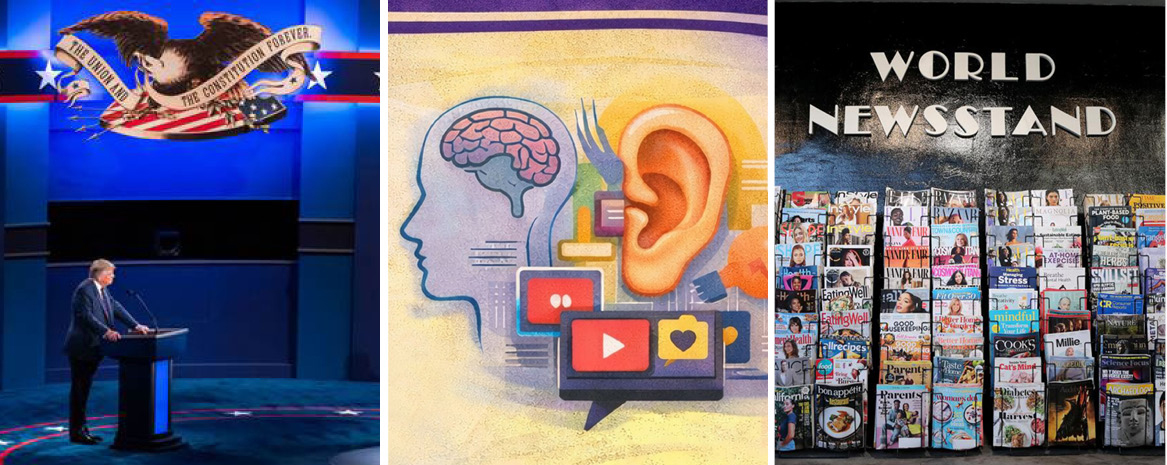
Social Effects of Technology and Social Media

COM 303
A Term; Asynchronous Online
Learn how social media and technology impact individuals and society. Topics covered include identity, authenticity, influencers, celebrity,  privacy, addiction, misinformation, moral panics, well-being, social comparison, body image, harassment, cancel culture, and more.
Katy Pearce, Communication
5 credits, SSc         


Technology & International Studies

JSIS B 255
A Term; Asynchronous Online
Explore technology's profound impact on international relations, examining how technologies from weapons of mass destruction and cybersecurity to energy and AI reshape the global order. This course is part of the new International Technology Studies minor.
Jessica Beyer, International Studies
5 credits, SSc


Anthropology of Science and Technology

ANTH 473
Full Term; Asynchronous Online
Science and technology are deeply human, social, and cultural enterprises. Explore how they shape — and are shaped by — society, culture, and power, using anthropological examples from digital life, global contexts, and Indigenous knowledge. Through the eyes of anthropologists, you'll uncover the hidden forces that shape scientific knowledge: power, politics, colonialism, and community.
Celia Lowe, Anthropology & International Studies
5 credits, SSc / NSc


AI, Learning, and Early Career

ARTSCI 150
Full Term; Asynchronous Online
AI is changing everything, and most people feel unsure where they fit. This course provides a way in. Learn foundational concepts at the intersection of artificial intelligence, learning, and early career development, and — through curated videos, guided reflections, and insights from industry professionals — explore how emerging technologies are reshaping the modern workplace. This course will also help you understand yourself: how you learn, what you care about, and how to move forward with confidence.
Anis Bawarshi, Arts & Sciences
1 credit. NOTE: Does not apply toward Areas of Inquiry. 

Montage of images related to Cool Courses

Arts & Culture

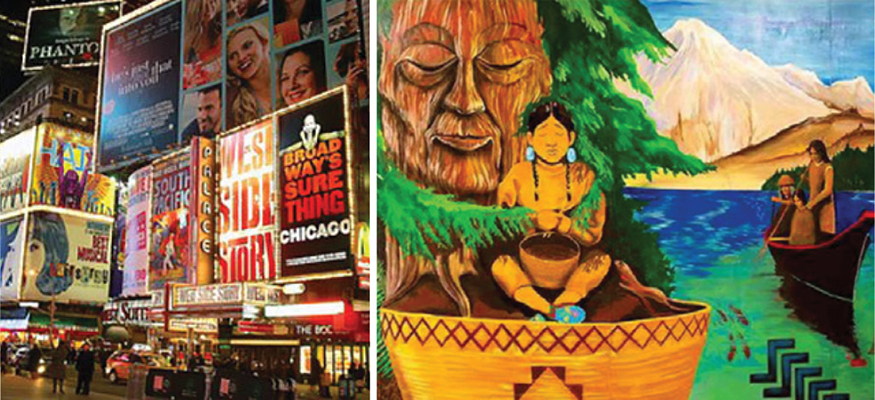
The Broadway Musical

DRAMA 171    
A Term; Synchronous Online
Learn how the Broadway musical, a uniquely American art form, was created predominately by people marginalized from mainstream society. The course covers this art form’s evolution and explores how musicals have both reflected and shaped American culture — especially in regard to issues of race, gender, sexual orientation, social justice, and equality. The instructor is the previous executive producer and artistic director of Seattle’s 5th Ave Theatre.  
David Armstrong, Drama
5 credits, A&H / DIV


Hip Hop and Indie Rock

GWSS 241
Full Term; Synchronous Online
This course explores popular music as a site of history, power, and social change, asking how intersecting social identities affect the stories we tell about particular genres of music. Engage with criticism that draws upon alternative archives to tell the story of popular music in innovative ways, and reflect on your own personal musical archives as you grapple with the ways that race/ethnicity, gender, sexuality, class, region, and identity inform music genres.             
Instructor TBA, Gender, Women and Sexuality Studies
5 credits, A&H / SSc / DIV


Introduction to Japanese Cinema and Media

JAPAN 325A
Full Term; Asynchronous Online
Learn about Japanese films from various genres — documentary, drama, historical pieces, the avant-garde, gangster films, and animation — and consider topics ranging from the nature of art to the moral questions of nuclear modernity. What could be better than watching a bunch of great films from the comfort of your own home, or wherever you have an internet connection?
Ted Mack, Asian Languages and Literature
5 credits, A&H / DIV


From Silent Film to Videogames: Mass Culture in Latin American Literature

SPAN 317
B Term; In Person
(listed as “Spanish and Latin American Literature in English Translation”)

Mass culture surrounds us!  How do Latin American writers experience and influence an often rapidly changing world in unpredictable ways?  In this course, we'll look at how fiction writers from the 20th and 21st centuries illustrate, react to, and conceptualize mass culture, from silent films and radio programs to magazines, comics, and video games.
Liz Hochberg, Spanish and Portuguese Studies
5 credits, A&H


American Indian Art and Aesthetics

AIS 170
B Term; Asynchronous Online
Engage with Indigenous intellectuals and activists who represent distinct arts sub-disciplines such as music, theatre, dance, visual and creative arts, film, television, new media, political activism, and more. The class will discuss their works in the context of historic and contemporary Indigenous-led and Indigeneity-centered resurgence movements.       
John-Carlos Perea, Ethnomusicology; American Indian Studies Adjunct Faculty
5 credits, A&H / DIV


Popular Film and the Holocaust

GERMAN 195 / JEW ST 175
A Term; Asynchronous Online
Is an art form that grew up with westerns, romcoms, and the Three Stooges up to the job of portraying the Holocaust? Since 1945, films and filmmakers have not only depicted the Holocaust but used it for dramatic and ideological reasons.  In this course, grounded in Holocaust history, students develop skills to analyze films critically and to parse the problems of representing a historical event of unimaginable tragic dimensions.
Martin Schwartz, German Studies
5 credits, A&H, DIV
Montage of images related to Cool Courses

Our Planet & Beyond

Introduction to the Universe

ASTR 101
Full Term; Asynchronous Online
Have you ever wondered how stars shine, what a black hole actually is, and how planets like Earth come to exist? This course, designed for non-science majors, is your grand tour of the cosmos.  We will explore the life and death of stars, the formation of planets and solar systems, the bizarre physics of black holes, and the evolution of galaxies across billions of years. The focus is on building genuine conceptual understanding rather than working through equations, making the material accessible without sacrificing the sense of wonder.
Chris Laws, Astronomy
5 credits, NSc / RSN


Our Global Environment: Physical and Human Dimensions

GEOG 205 A
Full Term; Asynchronous Online
Explore environmental systems using a geographic perspective that emphasizes relationships between different places, interconnections between people and environment, and spatial patterns of phenomena. With a focus on topics such as climate, atmosphere, water, ecosystems, and soils, the class will evaluate causes, consequences, and solutions to environmental problems.
Instructor TBD, Geography
5 credits, NSc


Introduction to Conservation Biology

BIOL 126
Full Term; Asynchronous Online
While loss of biodiversity is a concerning societal issue, one of the themes of this introduction to conservation biology is “hope.” Students will look at the application of biological principles to the conservation of biological diversity in its many forms and dimensions and learn about successful case studies in conservation, including sea turtles, peregrine falcons, Indian Rhinos, and many more.
Berry Brosi, Biology
5 credits, NSc


The Global Environment

JSIS B 351
Full Term; Asynchronous Online
Examine global environmental challenges — toxics and the human body, biodiversity conservation, climate change, disease, and other environmental problems — through a social lens, exploring how our interconnected world shapes and is shaped by environmental change. This course introduces students to international environmental, public health, and global issues.
Celia Lowe, International Studies & Anthropology
5 credits, SSc              


A Bugs Life: Entomology for Non-Entomologists

BIOL 497
Full Term; In Person
(listed as “Special Topics in Biology”)
Have you given much thought to insects, besides swatting them away? Insects illustrate complex concepts that apply to all aspects of life, even childhood memories.  Learn about insects through the lens of evolution, with topics that include forensic entomology and seasonal dynamics. The final project is your unique and personal take on insects.
Jen Paur, Biology
3 credits, NSc 

Montage of images related to Cool Courses

How We Communicate

Collaboration and Inclusion: Ways of Working Together

DRAMA 180
A Term; In Person
Learn about different styles of working with people. Designed for students of all backgrounds, this course helps students learn the soft skills required to work in any collaborative setting. Through experiential exercises, discussion, and collaborative projects, students will learn about tools and methodologies for promoting participation from groups of any size, as well as a process for critiquing the work of peers.
Geoff Korf, Drama
5 credits, A&H


Interpersonal Communication

COM 270
A Term & B Term; Asynchronous Online
Explore concepts in interpersonal communication that give shape to your everyday relationships, from acquaintances and friends to romantic partners and family members. This course offers new lenses to understand relational dynamics and to consider those ideas in the context of your own interpersonal communication practices. Through this exploration, you will develop stronger communication skills that can be applied in your own life. 
Tiana Case (A Term); Julia Simoes (B Term), Communication
5 credits, A&H / SSc / W Option


Communication Disorders in a Social World: Barriers and Bridges

SPHSC 110
Full Term; In Person
How do we decide what “normal” communication sounds like, and what happens when someone’s voice or hearing falls outside those expectations? Explore the biology of speech, hearing, and language sciences alongside the social forces — media portrayals, disability, and ableism / audism — that shape how communication differences are understood, and learn how future professionals and everyday advocates can help build a more inclusive world.
Yi Shen, Speech & Hearing Sciences
3 credits, SSc              


Comparative Media Systems

COM 420 / POL S 468 B / JSIS B 419 B  
A Term & B Term; Asynchronous Online
Why is the same global event reported very differently in different countries? We will compare policies that shape national communication processes and systems in North America, Europe, and beyond. Using real coverage — of protests, migration and refugees, and international conflicts — students will see how journalism reflects politics, culture, and international relationships, and why those differences in reporting matter today.     
Brook Fisher (A-Term), Nicole Zhang (B-Term), Communication
5 credits, SSc 


Japanese Language in Society

JAPAN 343
A Term, Synchronous Online
Learn about language minorities in Japan — both recent arrivals and groups with long histories — including Okinawan, Ainu, Chinese, Korean, Brazilian, and more. The course debunks the myth of "homogeneous" Japan through exploration of language development and histories of recent migrants, long-term immigrants, and Indigenous peoples. 
Amy Ohta, Asian Languages & Literature
5 credits, A&H / SSc

Montage of images related to Cool Courses

Life, Love & Death

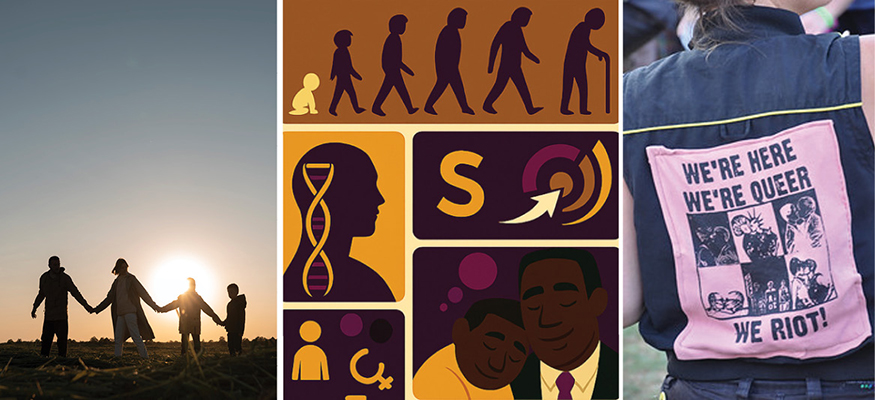
Men’s Health across the Lifespan

BIO A 350
Full Term; Synchronous Online
This course explores male health from conception to old age, examining how biology, environment, and culture shape disease risk, disparities, and prevention across the lifespan. The course is ideal for students of anthropology, the health sciences, and related fields, as well as anyone who wishes to understand the unique challenges of well-being in boys and men.
Alex Hill, Anthropology
5 credits, SSc


Queer Desires

GWSS 464
Full Term; In Person
“Queerness” is a category of analysis that extends beyond so-called identity politics. Rather, it encourages us to think critically about the way the categories of "normal" gender and sexuality are constructed. Using a range of sources including films, activist writings, and scholarly articles, this course offers an accessible introduction to the vibrant — and contentious — field of queer theory, and encourages students to think about desire and the politics of sexuality as gendered, raced, classed, and transnational processes.            
Instructor TBA, Gender, Women & Sexuality Studies
5 credits, SSc / DIV / W Option


Comparative Study of Death

ANTH 322 / RELIG 320
B Term; Asynchronous Online
Challenge your perspective on the universal experience of death. Explore death as a cultural and social phenomenon, examining (through anthropology, history, and literature) how beliefs and practices shape meaning, power, and life itself. Learn about the profound and diverse ways cultures around the world navigate death, grief, and the afterlife. Guest speakers include a death doula, spiritual leaders, and community representatives.               
Paula Saravia, Anthropology
5 credits, SSc 


The Family

SOC 352
Full Term; Synchronous Online
This course provides a broad overview of the issues and debates concerning the study of families in the US, with a focus on the family as a social institution. Topics covered include historical changes and societal variation in family patterns, changes over the life cycle, and alternative family forms. As you learn how individuals’ family lives are shaped by broader social systems, you may better understand your own family experiences.
Jenna Castillo, Sociology
5 credits, SSc    

Intensive Language Programs

In addition to the courses above, the UW offers intensive summer programs for a dozen languages, allowing students to complete a year of language study in only nine weeks. Check with departments to see if they offer summer intensives for languages they offer

More Stories

View looking up at two brick buildings on the UW quad, with blooming cherry trees and bright blue sky above.

Awards for Research, Podcasts & More

Recent awards celebrate Arts & Sciences faculty for their research, outreach, lifetime achievements, and more. 

Maddy Brown in a t-shirt and baseball cap stands on a basketball court.

A Math Course Inspired by TikTok & Basketball

After creating popular social media content analyzing basketball statistics, UW Mathematics doctoral student Maddy Brown created a course to help students present data through storytelling. 

Illustration of a student at a desk, with a computer monitor replacing his head.

AI in the Classroom? For Faculty, It's Complicated

Three College of Arts & Sciences professors discuss the impact of AI on their teaching and on student learning. The consensus? It’s complicated.

Explore Stories Across Arts & Sciences Departments